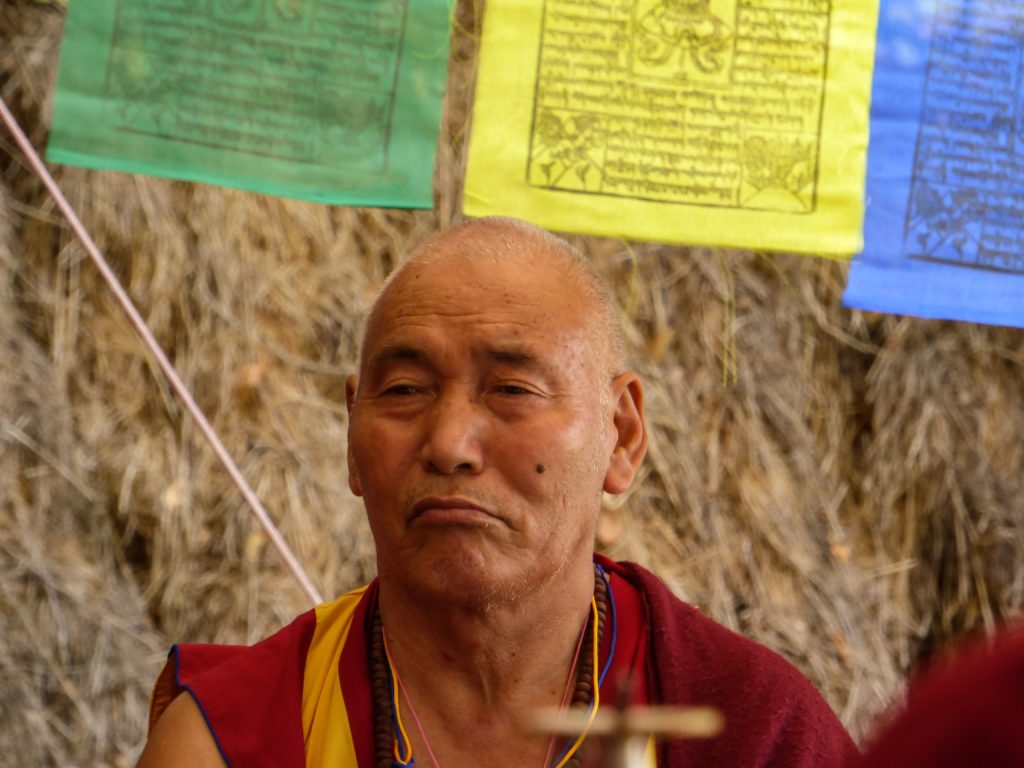
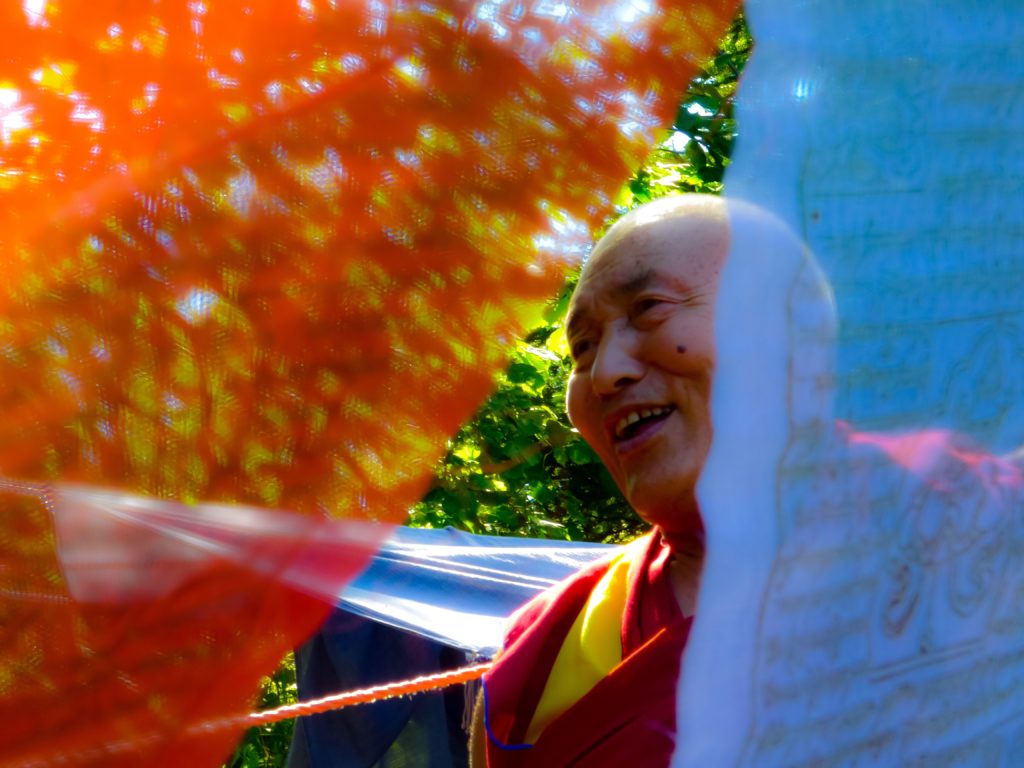
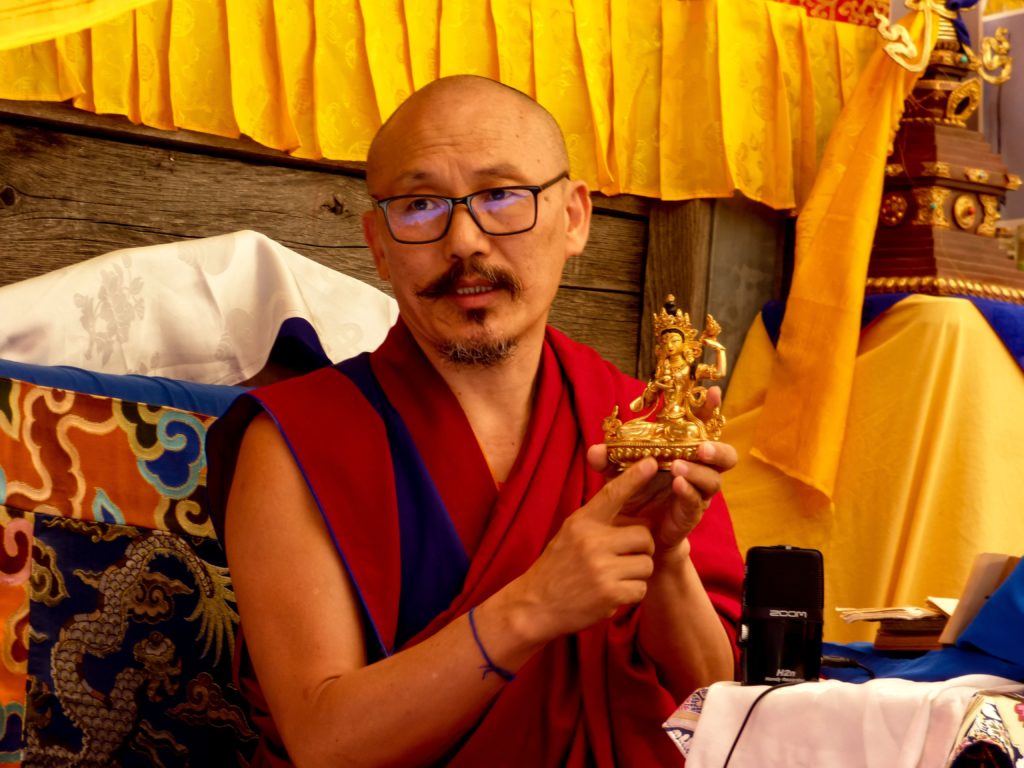
Éducation, valeurs, dignité ! Une école où la modernité se mêle à la tradition
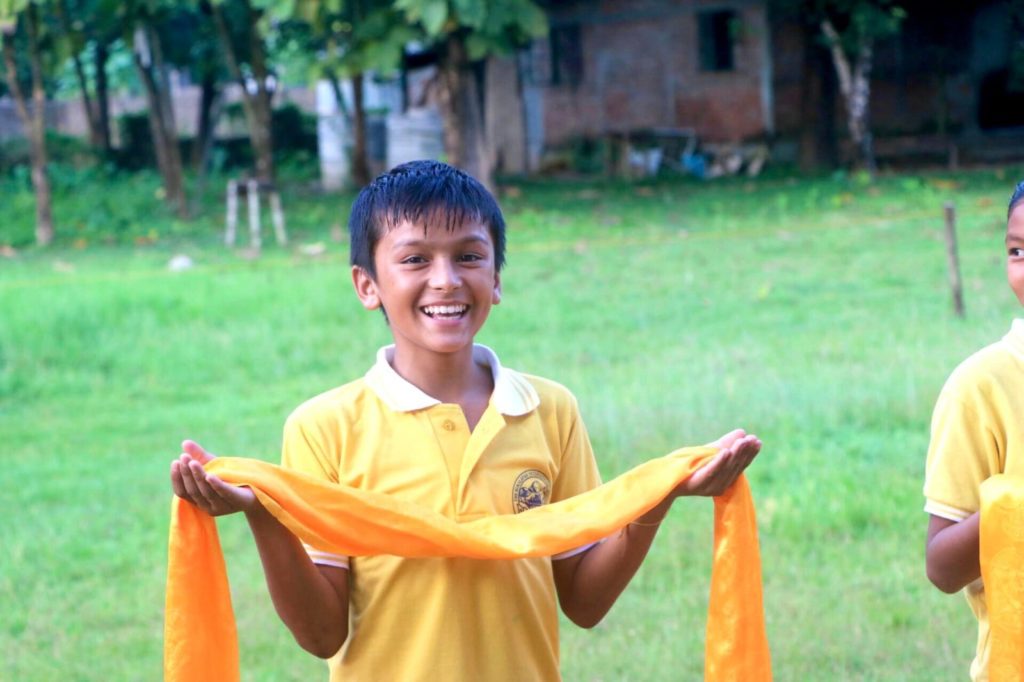
Lorsque les familles des villages reculés des montagnes de l’Himalaya envoient leurs enfants dans un monastère, cela ne signifie pas nécessairement qu’elles veulent qu’ils deviennent moines. Elles le font parce que le monastère éduquera les enfants dans leur langue maternelle et gratuitement. Le fondateur du monastère de Triten Norbutse à Katmandou, S.E. Yongdzin Tenzin Namdak Rinpoche, a accordé un refuge à de nombreux enfants mais il a toujours pensé qu’il serait préférable pour eux d’aller dans une véritable école, une école qui leur donnerait une éducation moderne mais qui transmettrait aussi les valeurs traditionnelles significatives de leurs communautés. Voici l’histoire d’une telle école.

(l’article original en anglais est ICI)

Les dures conditions climatiques, la pauvreté, le manque d’infrastructures, d’éducation et soins de santé – tout cela rend la vie des personnes qui vivent dans l’Himalaya difficile, voire douloureuse parfois. Des communautés parlant des dialectes tibétains ont vécu dans les montagnes pendant des siècles, mais aujourd’hui, toutes les familles qui en ont les moyens envoient leurs enfants dans des pensionnats éloignés pour les aider à avoir un meilleur avenir grâce à l’éducation. Cependant, beaucoup de ces pensionnats n’enseignent pas la langue et la culture tibétaines et les enfants grandissent déconnectés de leur langue maternelle et des traditions qui ont élevé leur peuple au fil des siècles. Ils peuvent même s’éloigner de leurs propres parents et de leurs proches.
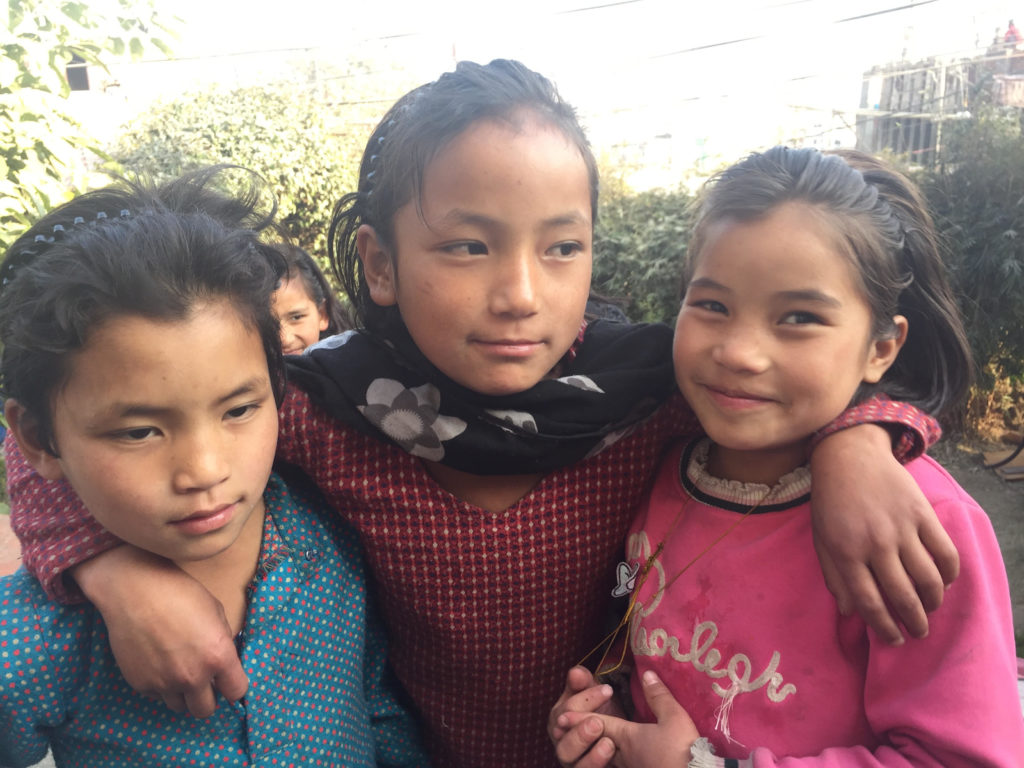
Ils partent en voyage…

Un grand nombre de familles ne peuvent pas se permettre de payer des frais de scolarité et gardent leurs enfants avec elles dans les villages. Mais, les écoles locales des régions de montagne ont un niveau d’enseignement très faible et ne font pas référence au contexte culturel et linguistique de la population tibétaine. Les enfants de ces familles vont probablement connaître le même cycle de difficultés et de lutte à vie que leurs parents.

Une autre option éducative pour les familles vivant dans les hautes altitudes de l’Himalaya est d’envoyer leurs enfants dans un monastère. Les monastères acceptent les enfants gratuitement et les éduquent dans leur propre langue. Toutefois, le curriculum monastique est axé sur les sujets traditionnels et sur les valeurs spirituelles et culturelles, et n’incluent pas d’éducation séculière moderne. En outre, la plupart des enfants ne sont pas enclins à aller dans un monastère. 

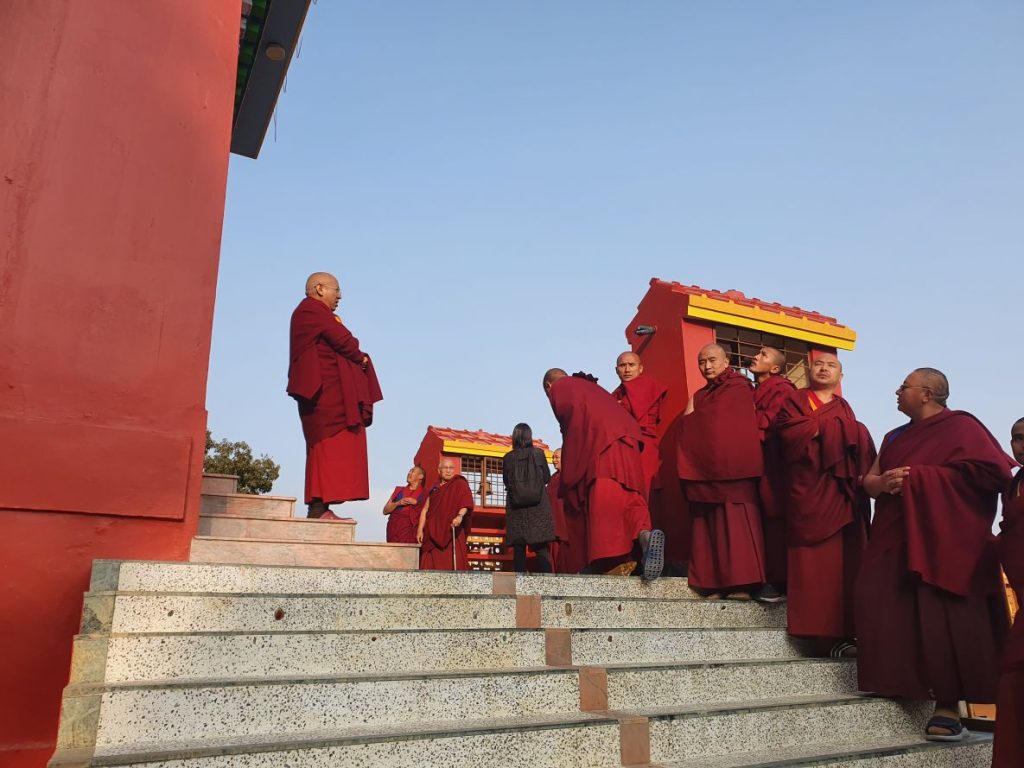
Le monastère de Triten Norbutse, à Katmandou, reçoit fréquemment des demandes de parents qui souhaitent y accueillir leurs enfants. Son fondateur, S.E. Yongdzin Tenzin Namdak Rinpoché, a donné refuge à beaucoup de ces enfants, mais il a toujours pensé qu’il serait préférable pour eux d’aller à l’école, une école qui leur donnerait une éducation moderne mais qui leur transmettrait aussi les valeurs traditionnelles significatives de leur communauté. 

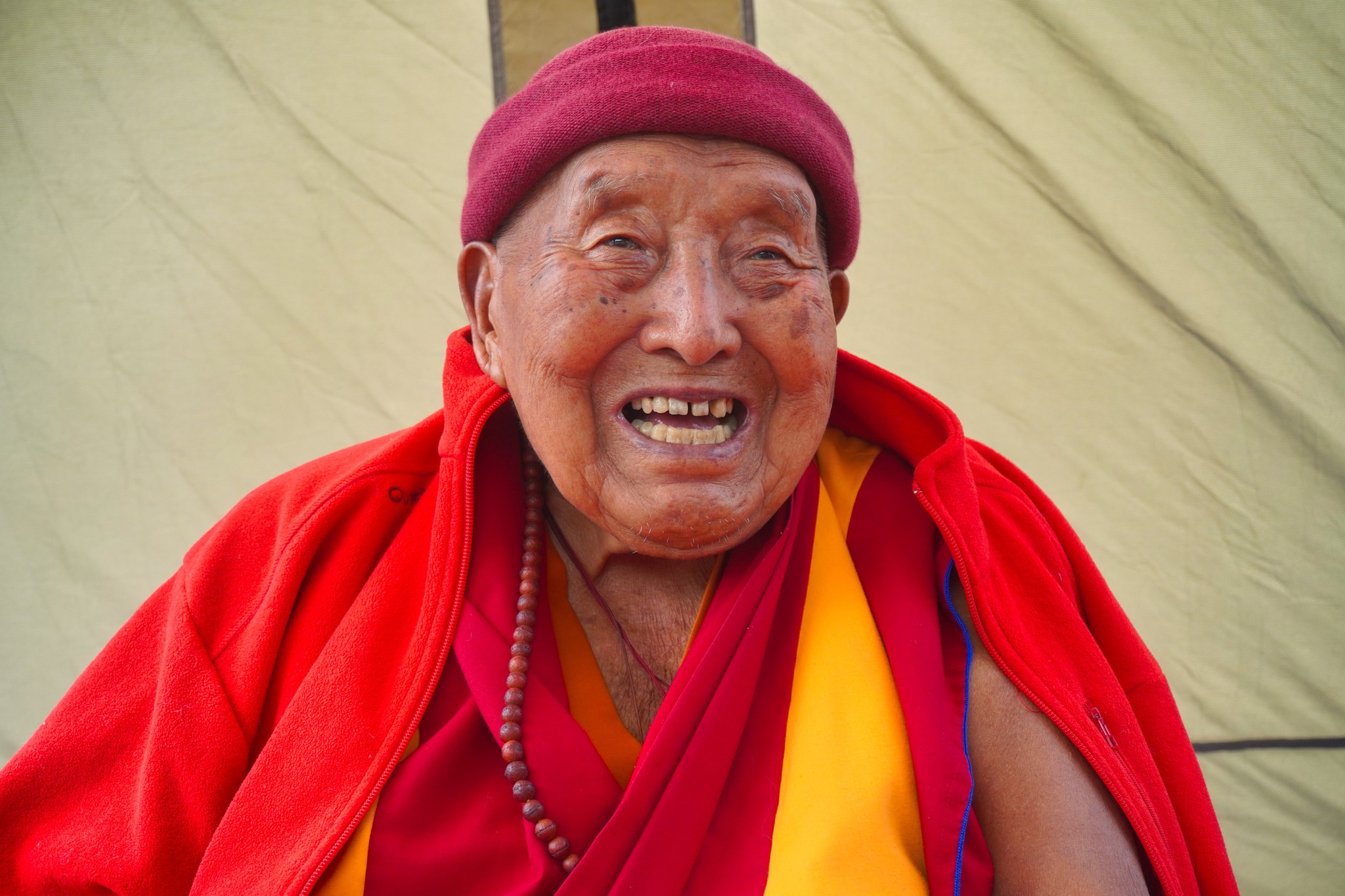
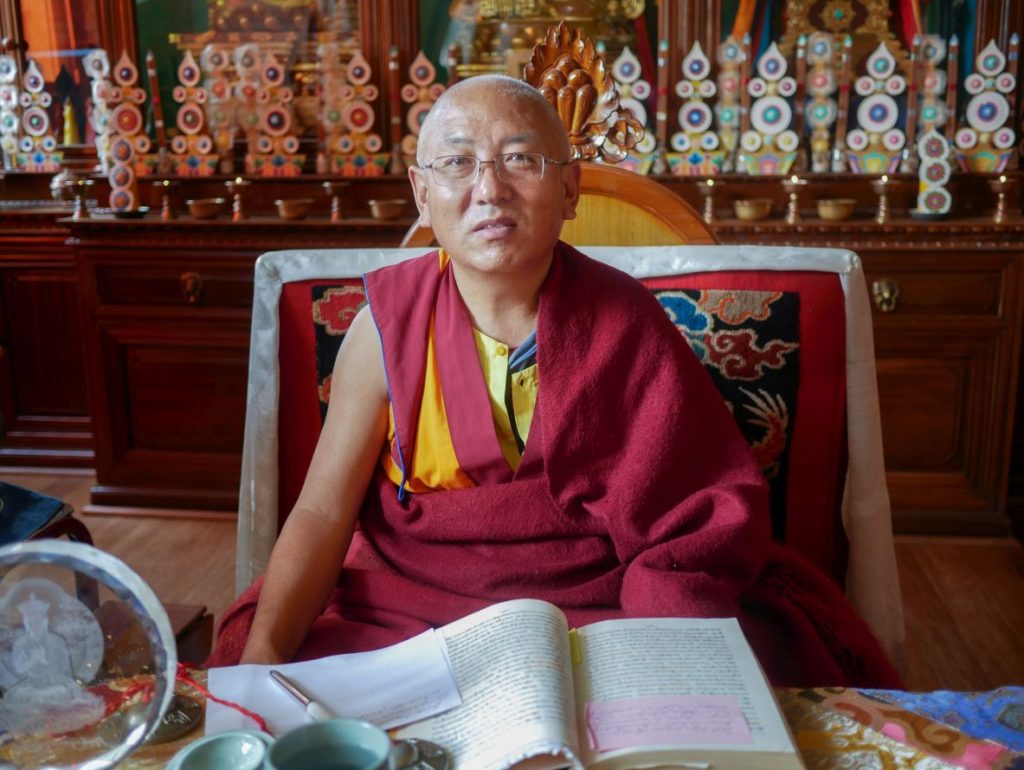
Le disciple de Yongdzin Rinpoché et l’actuel abbé de Triten Norbutse, Khenpo Tenpa Yungdrung Rinpoché, a pris l’initiative de construire une telle école, qui est devenue sa mission à long terme. 
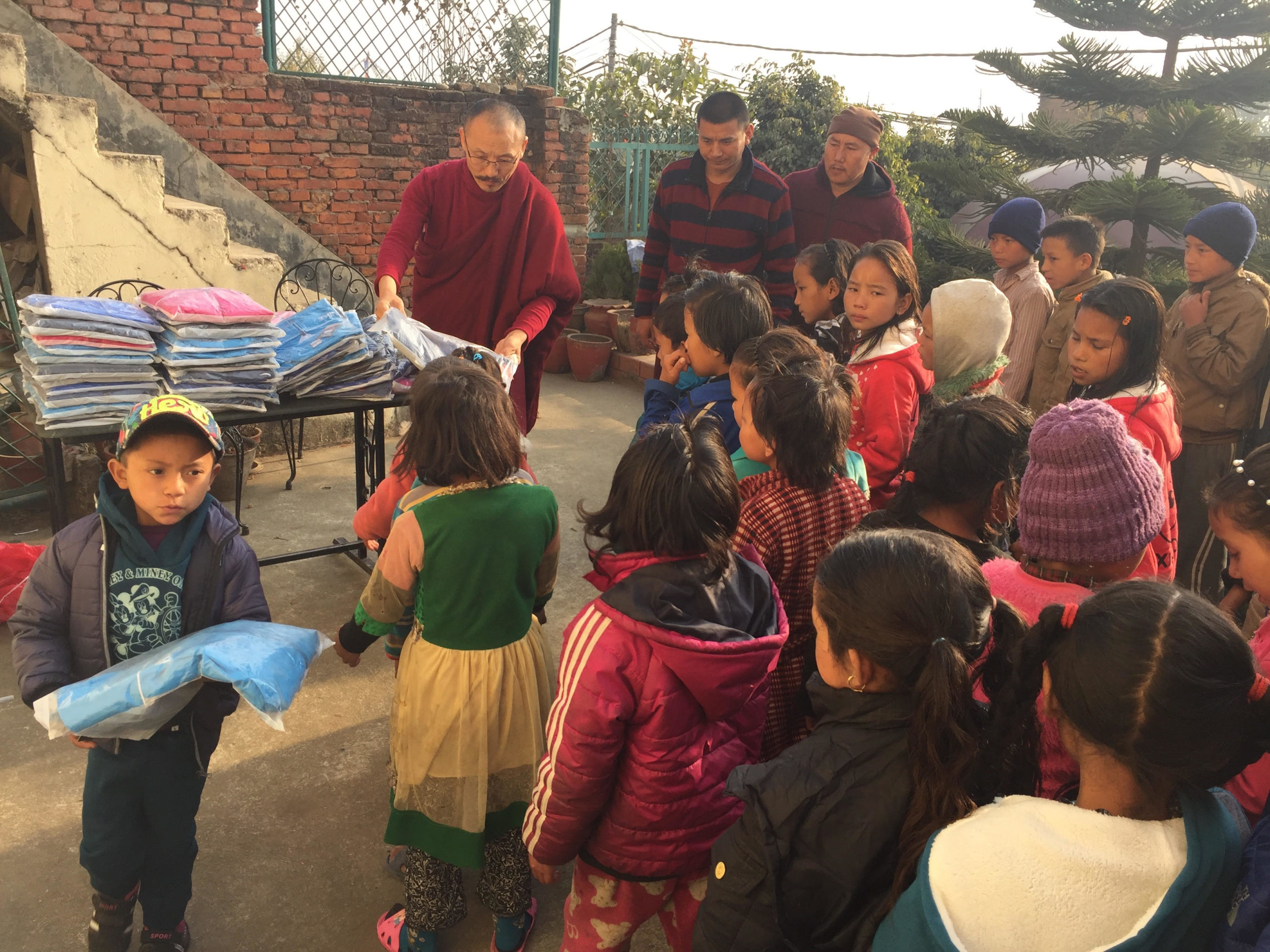
Le choix d’un lieu

À cette fin, en 2007, la Sherig Phuntsok Ling Bon Society, l’organisation fondatrice de l’école, a été enregistrée au Bengale occidental, un État situé dans le nord-est de l’Inde. La même année, une parcelle de terrain a été acquise à Siliguri, la capitale du Bengale occidental. La ville a été choisie pour son accès relativement facile aux différents coins de l’Himalaya, étant proche de Sikkim, Darjeeling, Kalimpong, et à seulement quarante minutes de route de la frontière avec le Népal. Le Bhoutan n’est qu’à cent cinquante kilomètres de là et il faut moins d’une journée, en voiture, pour se rendre à Katmandou, où réside la communauté monastique de Triten Norbutse.

Un autre point fort est que Siliguri est très diversifiée sur le plan ethnique, culturel et linguistique. “C’est un melting-pot de la région et elle est devenue un important centre culturel. Nous avons pensé qu’elle pourrait offrir de bonnes opportunités d’éducation pour nos élèves, une fois qu’ils ont fini l’école”, dit Khenpo Tenpa Yungdrung.

Il a fallu de nombreuses années avant que des fonds suffisants soient collectés et que la construction de l’école commence, en 2016.  Les architectes d’une société basée en France, Architecture et Dévelopment, ont été impliqués dans la planification. Avec des professionnels locaux, ils ont conçu une structure respectueuse de l’environnement et résistante aux tremblements de terre. Des matériaux naturels comme le bambou et les pierres locales ont été utilisés dans certaines parties de la construction. Le premier bâtiment de l’école comprenait des salles de classe, une cuisine, une salle à manger et de méditation, une bibliothèque, des dortoirs séparés pour les garçons et les filles, plusieurs salles pour le personnel, un petit dispensaire, ainsi que des toilettes et des salles de bain. 
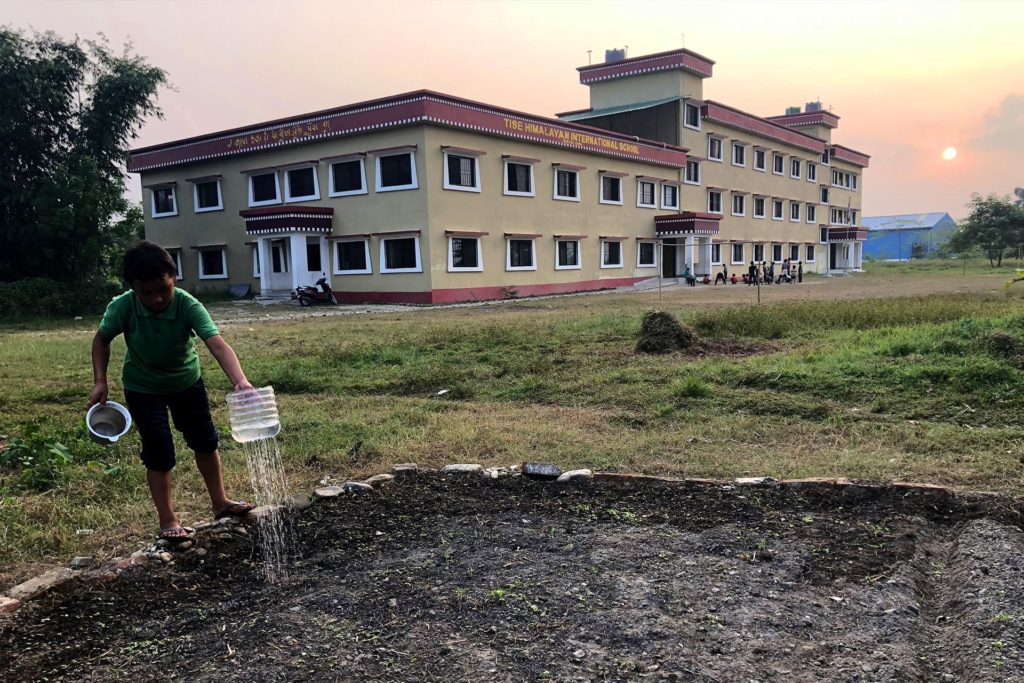
Le premier bâtiment scolaire a été prêt à la toute fin de l’année 2017.

L’ouverture de la nouvelle école a été annoncée grâce aux relations que l’équipe de l’école avait dans les montagnes. ” De plus, deux membres de l’équipe se sont rendus dans des villages éloignés et y ont diffusé la nouvelle “, explique Khenpo Tenpa Yungdrung.

Ainsi, entre janvier et mars 2018, environ soixante-dix enfants provenant de différentes régions de l’Himalaya de l’Inde et du Népal sont arrivés et se sont installés dans le pensionnat.  La plupart d’entre eux appartiennent à des familles économiquement et socialement vulnérables dont les valeurs et le contexte culturel sont ancrés dans le bouddhisme et le Bon, une ancienne tradition spirituelle très fortement présente dans les montagnes au cours des siècles passés. L’école est gratuite pour tous les enfants.
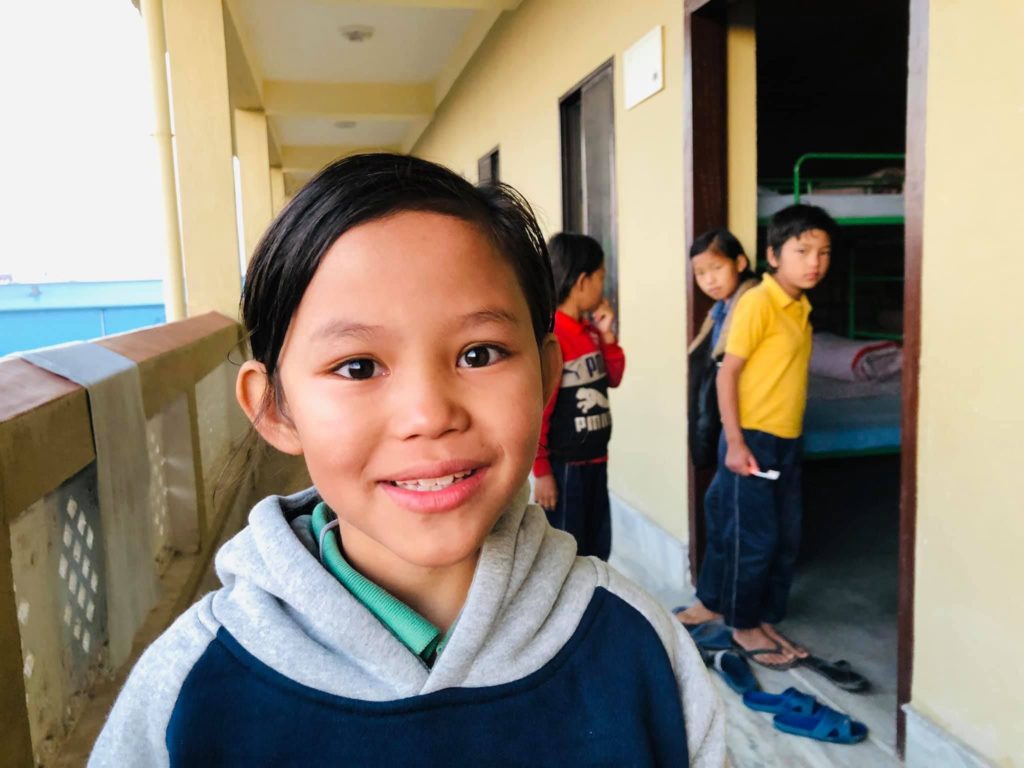
Tise Himalayan International School (THIS), comme l’école est appelée, a officiellement commencé avec quatre classes en avril 2018, lorsque la nouvelle année scolaire commence habituellement au Bengale occidental.  “Tout s’est déroulé sans problème. J’ai été impressionnée par la bonne organisation”, déclare Christine Trachte de Yungdrung Bon Stiftung, une fondation allemande qui soutient l’école depuis le tout début.

La direction de l’école a été confiée au président de la Sherig Phuntsok Ling Bon Society, le Vénérable Sonam Norbu, qui, au cours des quatorze années précédentes, avait été responsable de l’auberge et de l’enseignement de la langue et de la culture tibétaines dans l’école de Lubra au Mustang. Au début, son équipe pédagogique de base comprenait un directeur et quatre enseignants. Deux d’entre eux enseignent la langue et la culture tibétaines.

Le programme de l’école est tout à fait unique. Il répond aux normes éducatives requises par le gouvernement du Bengale-Occidental et le Conseil central de l’enseignement secondaire, mais il est enrichi d’éléments de l’art, de la culture et de l’histoire des régions himalayennes et met l’accent sur la conscience environnementale et le respect de la nature typiques de la spiritualité traditionnelle.  
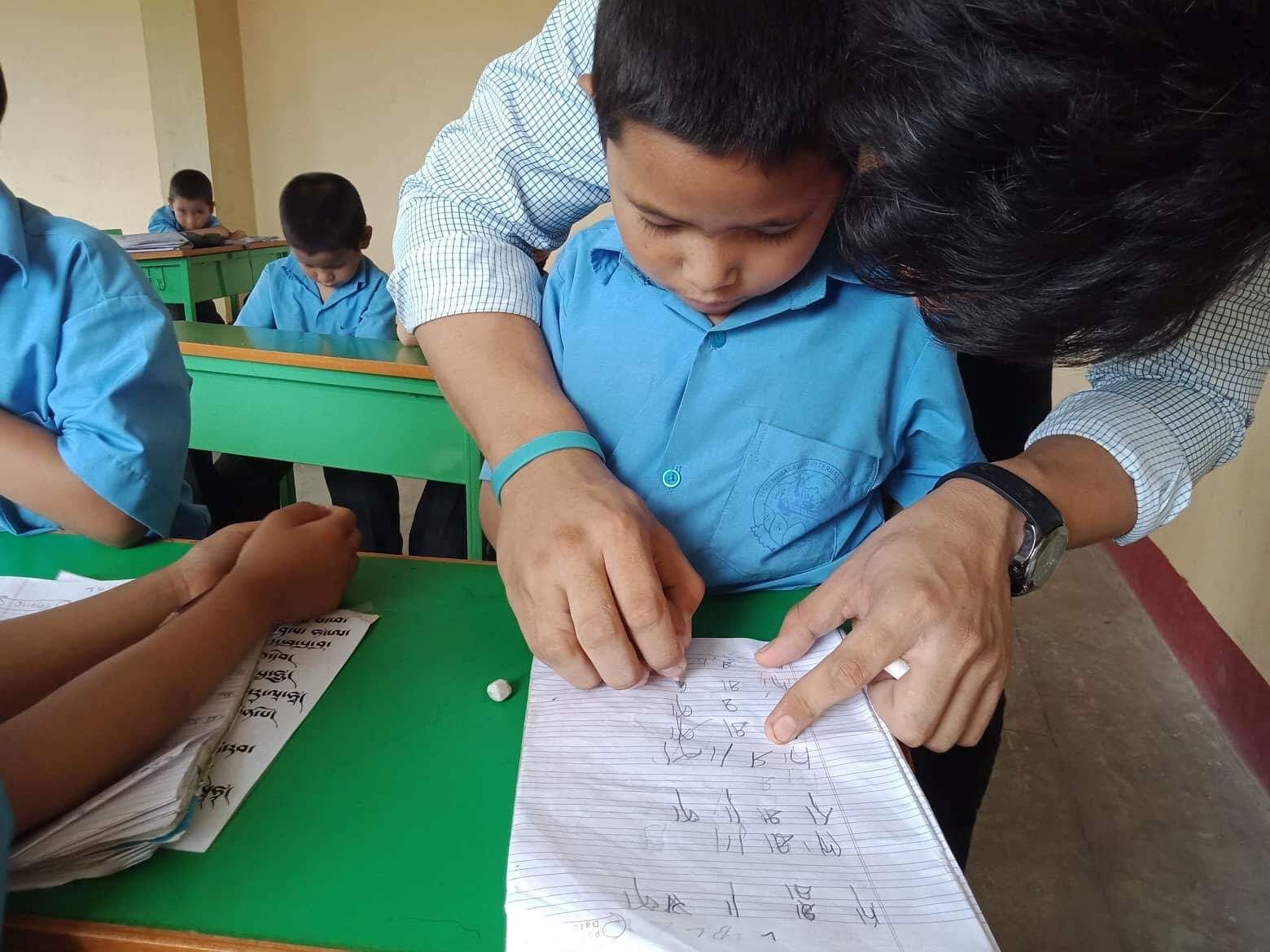
“Nous avons travaillé en étroite collaboration avec Khenpo Tenpa Rinpoché et Sherig Phuntsok Ling Bon Society pour définir la valeur ajoutée de l’école, en réfléchissant à la manière d’unir une approche scientifique rigoureuse de l’éducation et le riche bagage traditionnel de la culture himalayenne. Nous avons eu de nombreuses réunions à ce sujet”, raconte Mara Arizaga. Elle est l’un des fondateurs d’EVA (Enlightened Vision Association), une organisation à but non lucratif basée en Suisse qui se concentre principalement sur la préservation de l’héritage culturel de l’Himalaya et qui, depuis de nombreuses années, aide l’école de diverses manières.

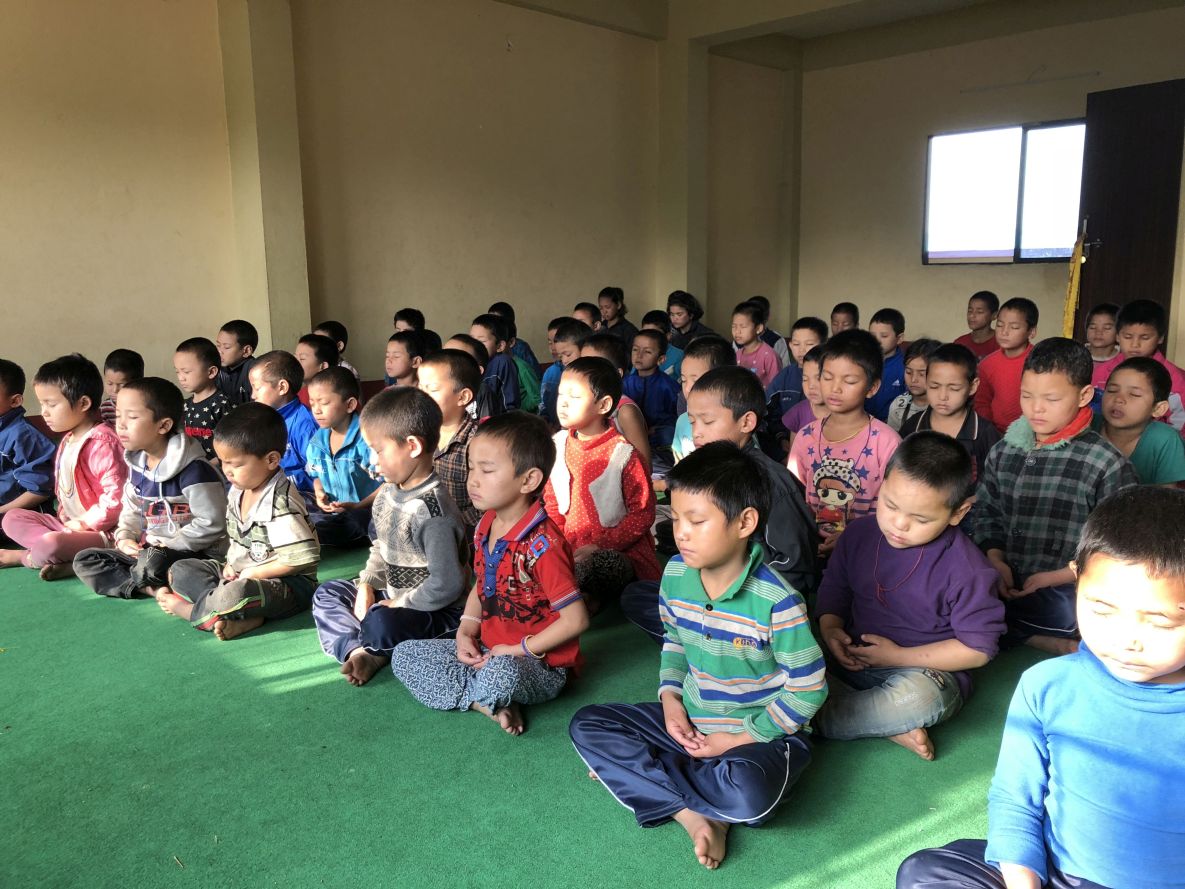
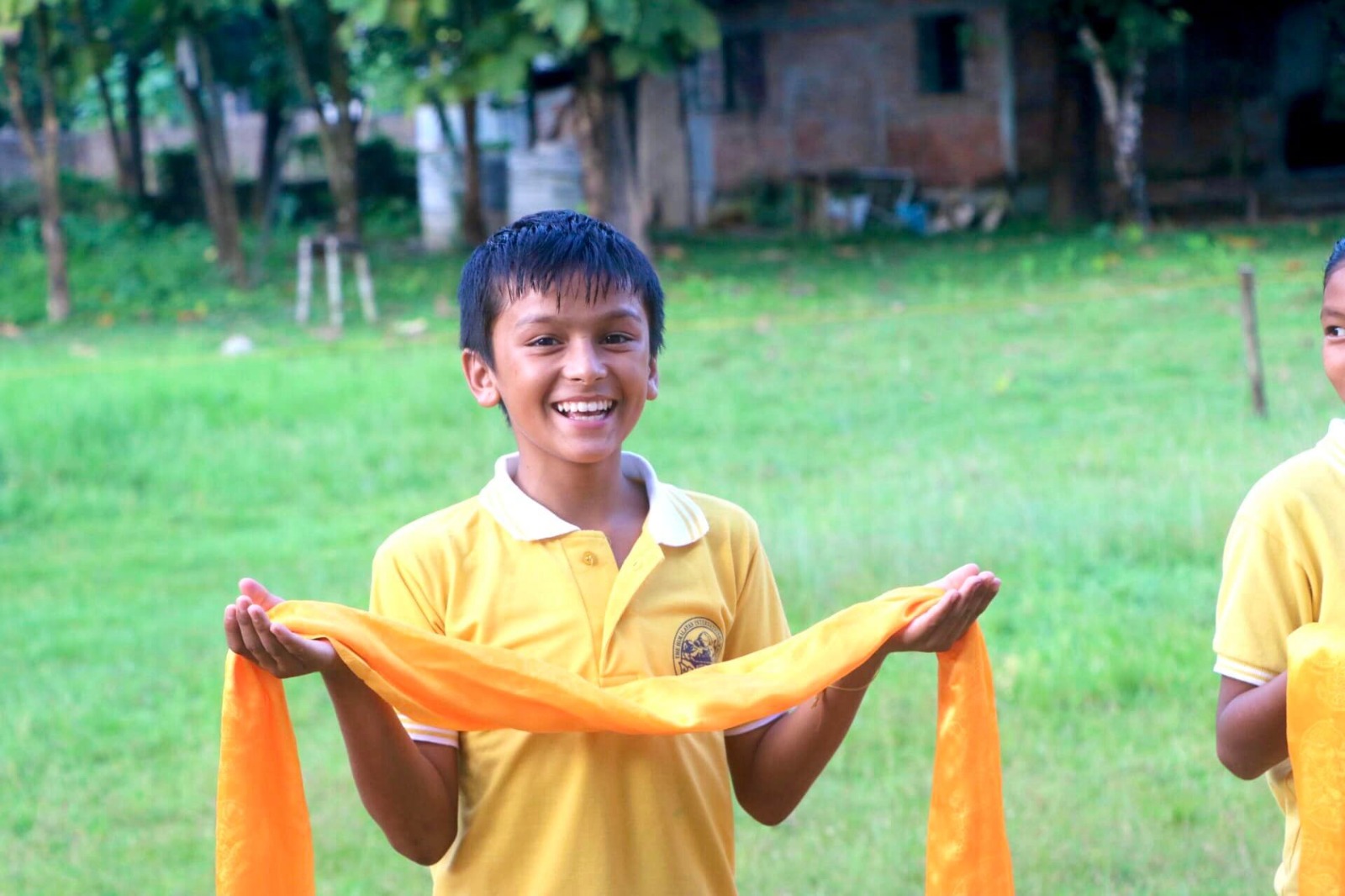
L’école a une approche holistique de l’éducation, impliquant le corps, la parole et l’esprit des élèves dans l’apprentissage. Elle donne l’occasion aux enfants de pratiquer le sport et la danse, ainsi que le yoga traditionnel himalayen. Les élèves sont initiés à la méditation et sont naturellement exposés aux valeurs spirituelles traditionnelles que sont l’empathie, la générosité et l’ouverture du cœur. 

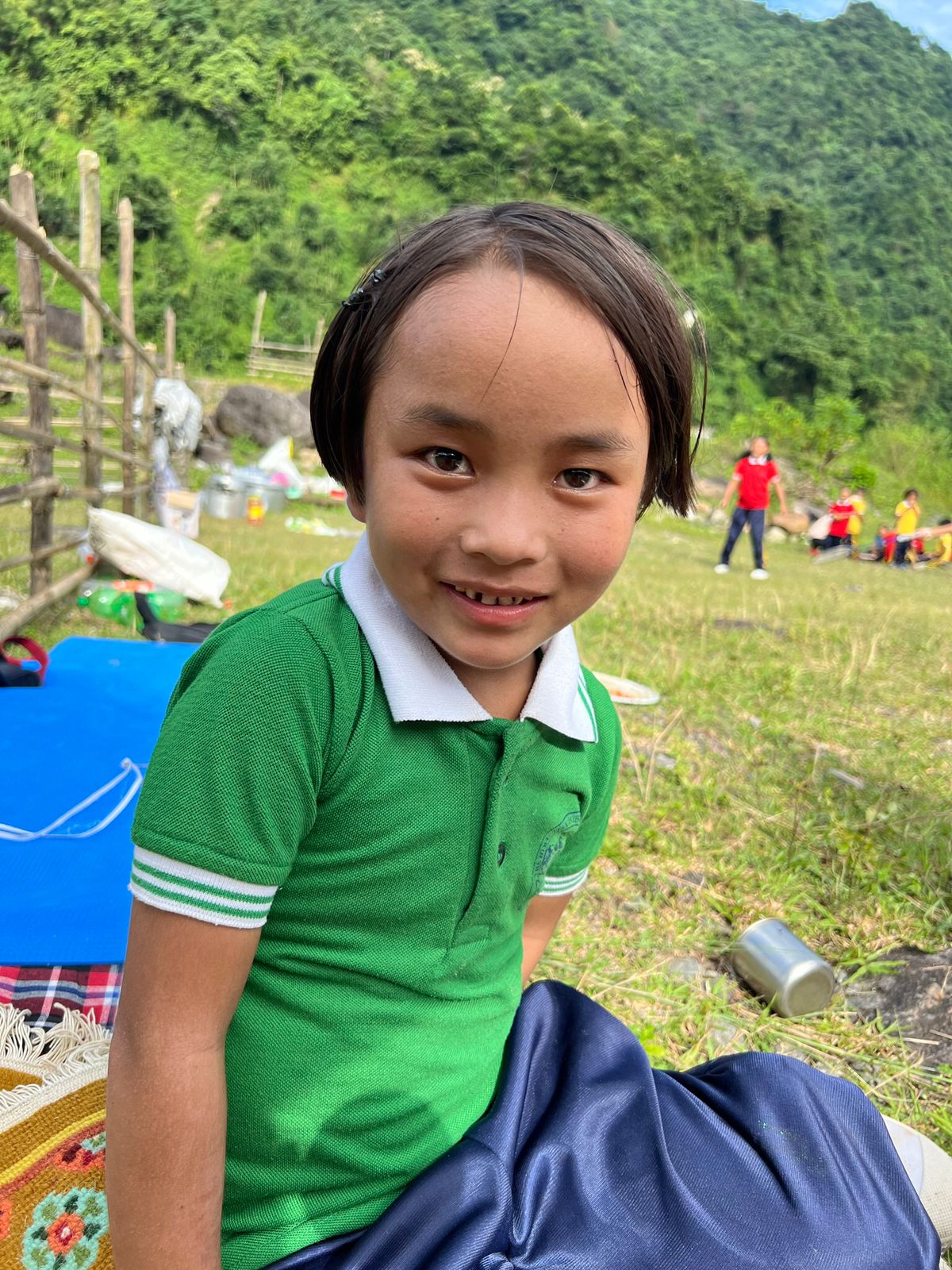
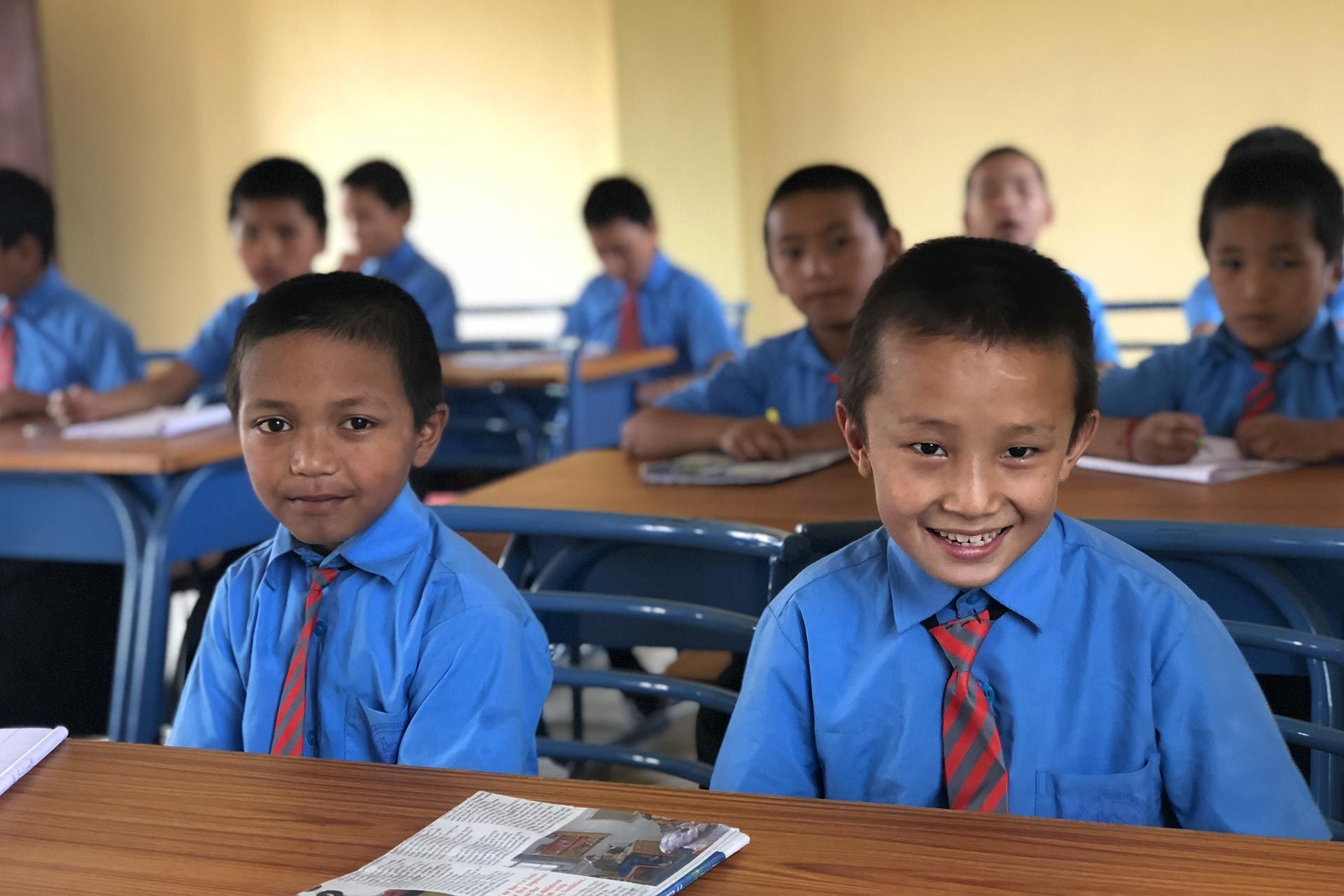
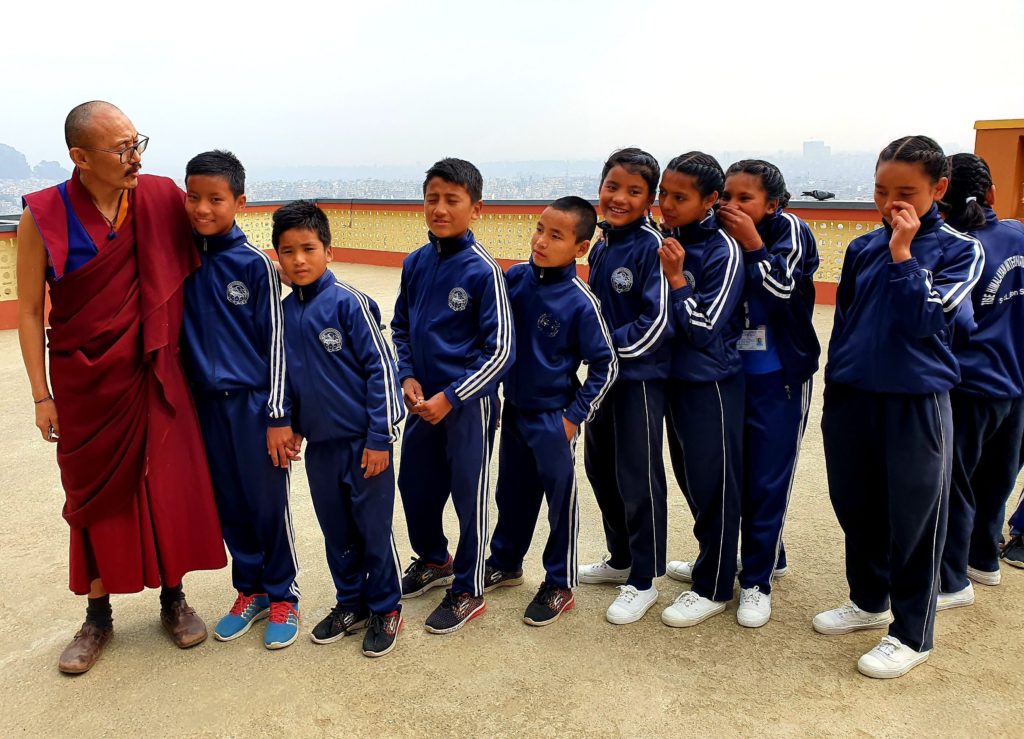
Un visiteur de l’école peut voir des enfants pleins de vie et de confiance dans un environnement chaleureux et coloré. Bien qu’ils soient éloignés de leurs parents pendant de longues périodes et qu’ils ne puissent souvent pas leur rendre visite, même pendant les vacances, ils savent que c’est l’occasion pour eux de montrer tout leur potentiel. Cela les aide à surmonter le mal du pays.
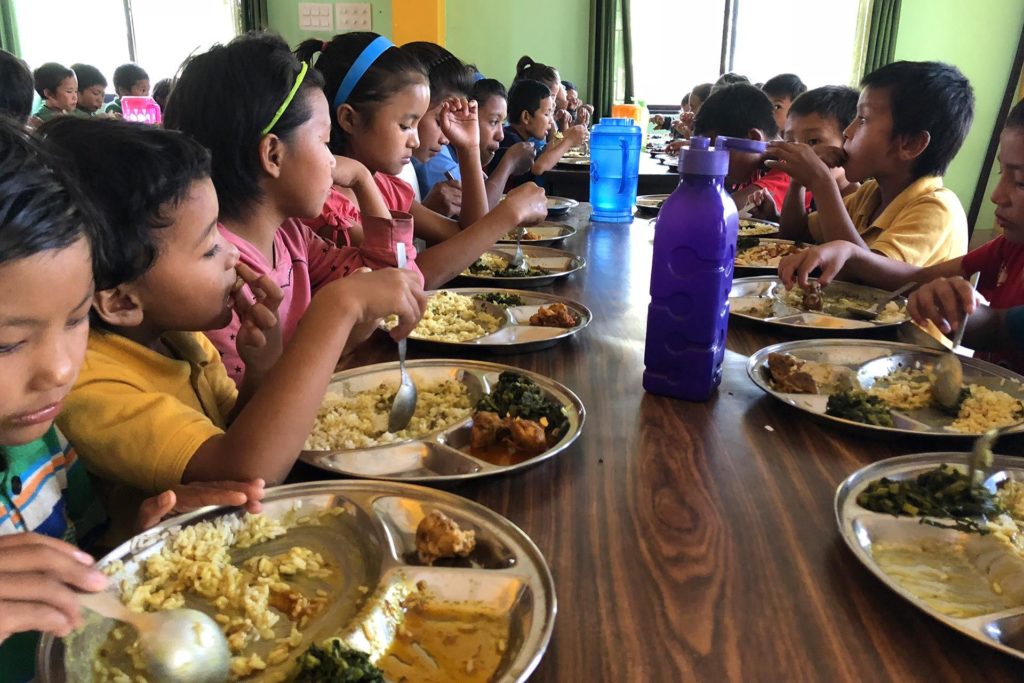
L’internat et les frais de scolarité sont gratuits pour tous les enfants.

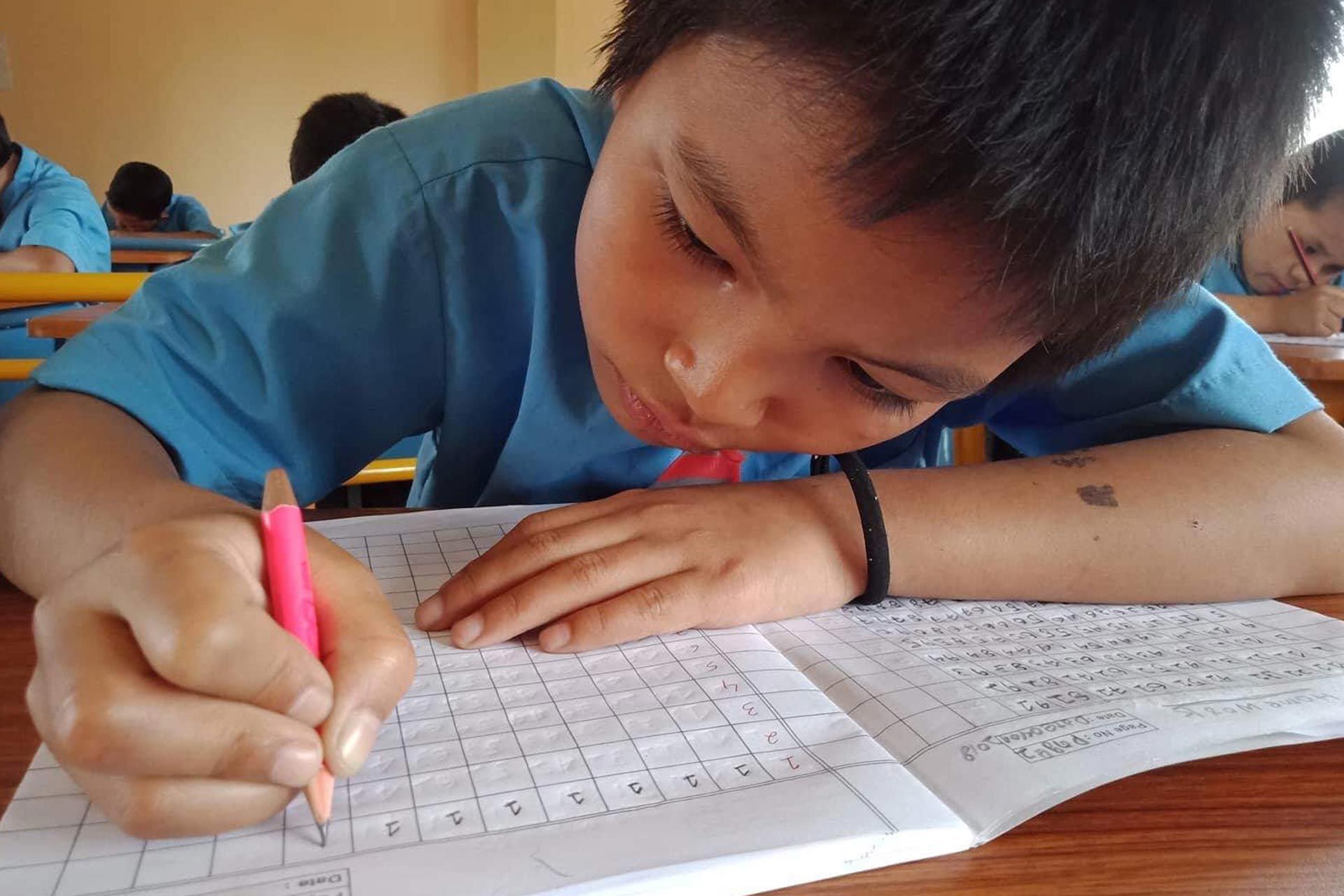
Afin de maintenir les liens avec leur terre natale, THIS a également produit ses propres manuels d’apprentissage du tibétain avec des histoires qui présentent aux enfants les personnalités, les montagnes ou les rivières des régions dont ils sont originaires. Khenpo Tenpa Yungdrung a formé une équipe de personnes qui ont recherché et collecté ces histoires et créé des textes basés sur celles-ci.

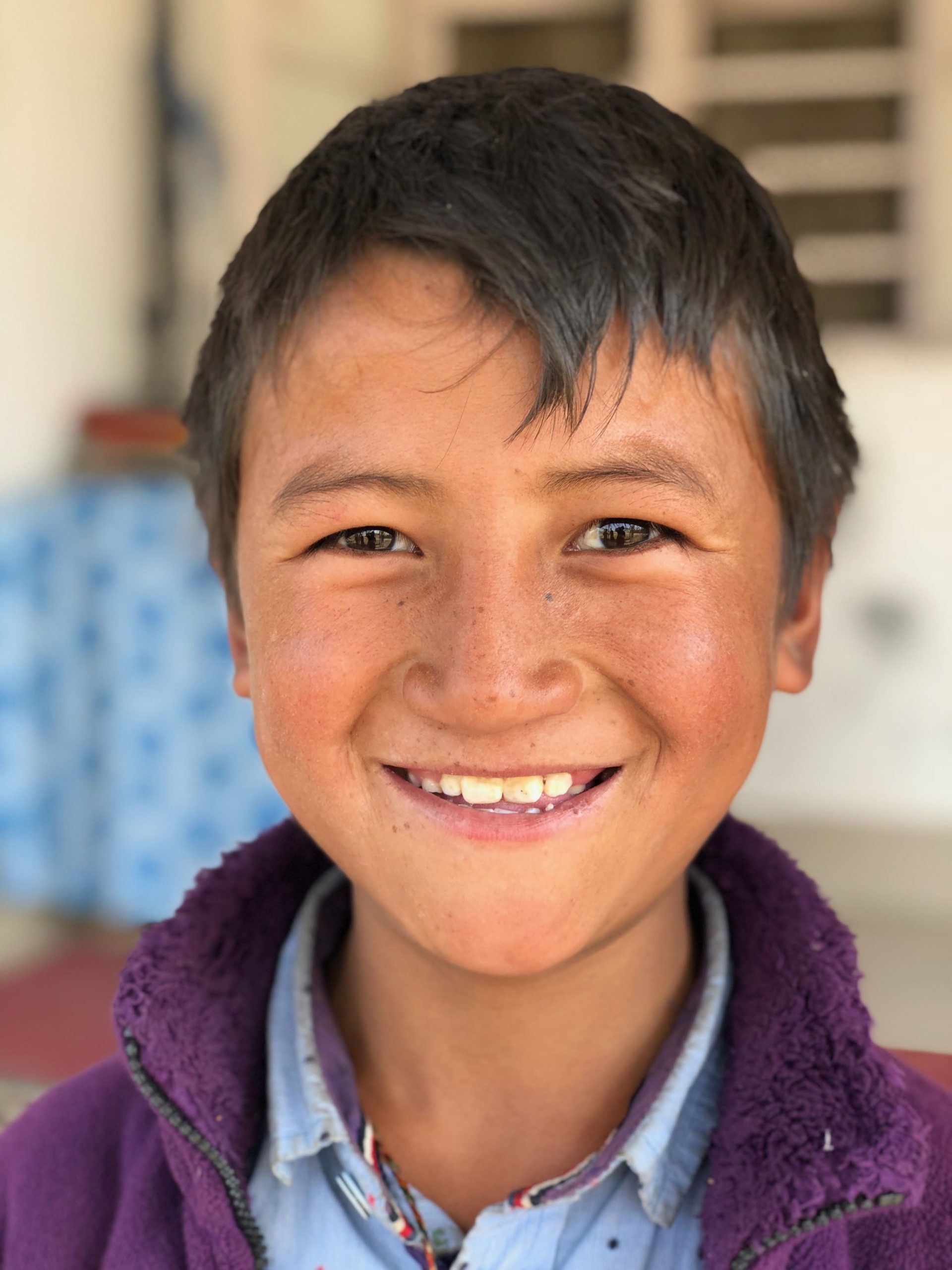
Parfois, des parents viennent visiter l’école. Vieillis prématurément par le dur labeur, et ressemblant davantage à des grands-parents, ils sont visiblement émus de voir leurs enfants s’épanouir dans une vie dont ils n’auraient jamais pu rêver pour eux-mêmes.

La voie difficile

Actuellement, THIS compte sept classes et dispense un enseignement à 138 enfants, dont la moitié sont des filles. Promouvoir l’égalité des chances pour les filles est l’un des objectifs de l’école. Onze enseignants, une nounou et un cuisinier s’occupent des enfants. En outre, quatre membres de la société Sherig Phuntsok Ling Bon travaillent pour le bien-être général des enfants, gérant également l’administration de l’école et réalisant des projets liés à l’extension et au développement des bâtiments scolaires.

L’école ne reçoit aucune aide financière du gouvernement et ne perçoit pas de frais de scolarité, ce qui signifie qu’elle dépend entièrement des donateurs. Sa viabilité financière est un grand défi, mais Khenpo Tenpa Yungdrung est intransigeant dans son objectif de maintenir le haut niveau de l’école. “Les écoles de charité comme la nôtre ne peuvent parfois pas offrir la meilleure éducation par manque de fonds, mais nous voulons être une école exceptionnelle quoi qu’il arrive”, dit-il.  “Abaisser la qualité serait humiliant pour les enfants et leur dignité est très importante pour moi. Je veux que l’école leur donne la certitude qu’ils sont aussi bons que n’importe qui d’autre et parfaits comme ils sont”, affirme Khenpo Tenpa Yungdrung.

Il est lui-même un donateur, donnant à l’école tout ce qu’il reçoit en tant qu’enseignant du dharma, et il travaille sans relâche pour augmenter les dons, envoyant des demandes de financement, suivant chaque opportunité qui se présente. Les personnes de la société Sherig Phuntsok Ling Bon, la fondation allemande Yungdrung Bon Stiftung et l’organisation suisse EVA le soutiennent dans ses efforts, tout comme d’autres organisations et individus. Pourtant, les fonds ne sont pas suffisants pour le moment. “Nous sommes toujours en équilibre sur le fil du rasoir”, déclare Khenpo Tenpa Yungdrung. 
L’une des priorités qu’il mentionne est d’augmenter les salaires des enseignants et de leur donner des contrats de travail plus stables afin qu’ils ressentent moins d’incertitude. Les salaires que l’école peut se permettre de verser pour le moment sont encore loin d’être attractifs.

Il est également urgent de finaliser la construction du deuxième bâtiment, une structure de trois étages commencée en 2020. Il contient quinze salles de classe, des bureaux et des espaces de travail pour les enseignants, ainsi que des toilettes. Plus de la moitié du coût a déjà été payé et l’entreprise de construction continue de travailler avec la promesse d’être payée lorsque d’autres finances seront disponibles.

L’école a également besoin d’un nouveau dortoir pour les filles afin de pouvoir inscrire davantage d’enfants, jusqu’à la pleine capacité de 300 élèves, 150 garçons et 150 filles, avec une moyenne de 25 enfants par classe, et 12 classes au total. L’école vise à couvrir un enseignement secondaire complet.

Enfin, à l’avenir, le souhait de Khenpo Tenpa Yungdrung est de construire une petite clinique sur le terrain de l’école. Cet établissement de soins aurait une double fonction – prendre soin de la santé de la communauté de l’ école et aussi préserver et développer la science médicale traditionnelle de l’ Himalaya. 

“Les connaissances médicales himalayennes et la tradition de respect de la nature ont peut-être un mot à dire dans le monde actuel qui est confronté à des déséquilibres et à une dégradation importante de l’environnement”, déclare Khenpo Tenpa Yungdrung.

Il estime que l’école ne profitera pas seulement aux enfants, mais qu’elle aura également une influence positive sur le monde qui les entoure. “Où qu’ils aillent par la suite, quelle que soit leur carrière dans la vie, les valeurs qui leur ont été enseignées resteront avec eux”, pense-t-il.
Photos : archives de Khenpo Tenpa Yungdrung Rinpoche, Jitka Polanská, Darek Sawczuk


Education, values, dignity! A school where modernity blends with tradition

When families from remote villages of the Himalayan mountains send their children to a monastery, it does not necessarily mean that they want them to become monks. They do so also because the monastery will educate children in their native tongue and it will be free of charge. The founder of Triten Norbutse monastery in Kathmandu, H.E. Yongdzin Tenzin Namdak Rinpoche, has granted a refuge to many children but he has always felt it would be good for many of them to go to a proper school,  a school which would give them a modern education but also transmit the meaningful traditional values of their communities. Here is a story of such a school.

Harsh climate conditions, poverty, lack of infrastructure, education and healthcare – all this makes the life of the people who live in the Himalayas difficult, even painful at times. Communities speaking Tibetan dialects have lived in the mountains for centuries, but now all families who have the means send their children to distant boarding schools to help them have a better future through education. Many of these boarding schools, though, do not teach the Tibetan language and culture and the children grow up disconnected from their mother tongue and from the traditions which have uplifted their people throughout the centuries. They may  even become  alienated from their own parents and relatives.

They set out on a journey…

A large number of families cannot afford to pay any tuition fees and  keep their children with them in the villages. But the mountain regions’ local schools have very poor teaching standards and do not refer to the native cultural and linguistic background of the Tibetan speaking population. Children from those families are probably going to experience the same cycle of hardships and life-long struggle as their parents.

Another educational option for families  living in the high altitudes of the Himalayas is to send their children to a monastery. Monasteries  accept children free of charge and educate them in their own language. However, a monastic curriculum is focused on traditional subjects and spiritual and cultural values and does not include a modern, secular education. Also, most children are not inclined to go to a monastery. 

Triten Norbutse monastery in Kathmandu receives frequent requests from parents to take their children in. Its founder,  H.E. Yongdzin Tenzin Namdak Rinpoche has granted refuge to many of those children but he always felt it would be better for them to go to school, a school which would give them a modern education but also transmit the meaningful traditional values of their communities. 

Yongdzin Rinpoche´s disciple and the current abbot of Triten Norbutse Khenpo Tenpa Yungdrung Rinpoche took it upon himself to build such a school, and it has become his long lasting mission. 

The choice of a place

For this purpose, in 2007, Sherig Phuntsok Ling Bon Society, the founding organization of the school, was registered in West Bengal, a state in the northeast part of India. A parcel of land was acquired in the same year in Siliguri, the capital of West Bengal. The city was chosen for having relatively easy access to different corners of the Himalayas, being close to Sikkim, Darjeeling, Kalimpong, and only forty minutes drive from the border with Nepal. Bhutan is only one hundred fifty kilometers from there and it takes less than one day, traveling by car, to get to Kathmandu, where the monastic community of Triten Norbutse resides.

Another strong point is that Siliguri is ethnically, culturally, and linguistically very diverse. “It is a melting pot of the area and it has become an important cultural center. We thought it would offer good educational opportunities to our students, once they finished the school,” Khenpo Tenpa Yungdrung says. 

It took many years before sufficient funds were collected and the construction of the first building of the school started, in 2016.  Architects  from a France-based company Architecture et Dévelopment were involved in the planning. Together with local professionals, they designed an environmentally friendly and earthquake resistant structure. Natural materials like bamboo and local stones were used in some parts of the construction. The first building of the school included classrooms, a kitchen, a dining and meditation room, a library, separate dormitories for boys and girls, several staff rooms, a small dispensary, and toilets and bathrooms. 

The first school building was ready at the very end of 2017.

The opening of the new school was announced through the connections that the school team had in the mountains. “Also, two members of the team traveled to remote villages and spread the news there,” Khenpo Tenpa Yungdrung says.

As a result,  between January and March of 2018,  around seventy children from different parts of the Himalayas of India and Nepal arrived and settled in the boarding school.  Most of them belong to economically and socially vulnerable families whose values and cultural background are rooted in Buddhism and Bon, an ancient spiritual  tradition very strongly present in the mountains in the past centuries. The school is free of charge for all the children.

Modern, yet traditional

Tise Himalayan International School (THIS), as the school is called,  officially started with four classes in April 2018, when the new school year usually begins in West Bengal.  “Everything went very smoothly. I was impressed by the good organization,” says Christine Trachte from Yungdrung Bon Stiftung, a German foundation which has supported the school since the very beginning.

Entrusted with leading the school was the President of Sherig Phuntsok Ling Bon Society, Ven. Sonam Norbu, who, in the previous fourteen years, had been responsible for the hostel and teaching Tibetan language and culture in the school in Lubra in Mustang. In the beginning, his core pedagogical team included a headmaster and four teachers. Two of them teach Tibetan language and culture.

The school’s curriculum is quite unique. It meets the educational standards required by the government of West Bengal and the Central Board of Secondary Education, but it is enriched with elements of the art, culture, and history of the Himalayan regions and emphasizes the environmental awareness and respect for nature typical of the traditional spirituality.  

“We worked very closely with Khenpo Tenpa Rinpoche and Sherig Phuntsok Ling Bon Society to define the added value of the school, thinking of how to unite a rigorous scientific approach to the education and the rich traditional background of the Himalayan culture. We had so many meetings about it,” Mara Arizaga says. She is one of the founders of EVA (Enlightened Vision Association), a non-for- profit organization based in Switzerland that focuses mainly on the preservation of the cultural heritage of the Himalayas and for many years, has been helping the school in various ways.

The school has a holistic approach to education, engaging students´ body, speech and mind in the learning. It gives opportunities for children to practice sports and dance, as well as traditional Himalayan yoga. Students are introduced to meditation and naturally exposed to the traditional spiritual  values of empathy, generosity, and open heartedness. 

A visitor to the school can see lively and self-confident children. Although they are far away from their parents for long periods and often cannot visit them even during the holidays, they know that this is a great opportunity for them to display all their potential. This helps them  overcome homesickness.

Boarding and tuition is free for all the children.

To keep their connections with their homeland alive, THIS produced its own textbooks for learning Tibetan with stories which introduce children to personalities, mountains, or rivers of the areas they come from. Khenpo Tenpa Yungdrung formed a team of people who researched and collected those stories and created texts based on them.

Sometimes, parents  come to visit the school. Aged prematurely by  hard labor, they are visibly moved  to see their children blossoming into a life they could  never have dreamt of for themselves.


The hard way

Currently, THIS has seven classes and provides education for 138 children, half of them  girls. Promoting equal opportunities for girls is one of the objectives of the school. Eleven teachers, a nanny, and a cook take care of the children. In addition, four members of Sherig Phuntsok Ling Bon Society work for the overall welfare of the children, managing also the school´s administration and carrying out projects related to the extension and development of school buildings.

The school neither receives governmental financial support, nor collects any tuition fees which means it is completely  dependent on donors. Its financial sustainability is a big challenge, but Khenpo Tenpa Yungdrung is uncompromising in his objective to keep the high standard  of the school. “Charity schools like ours sometimes cannot offer the best education because they lack funds, but we want to be an outstanding school no matter what,” he says. “Lowering standards would be humiliating for children and their dignity is very important to me. I want  the school to give them certainty that they are as  good as anyone else and perfect as they are,” Khenpo Tenpa Yungdrung  says.

He himself is a donor, giving all  he receives as a dharma teacher to the school and he has been tirelessly working to increase donations, sending out applications for funding, following up every opportunity that arises.  People from Sherig Phuntsok Ling Bon Society, the German Foundation Yungdrung Bon Stiftung, and the Swiss organization EVA support him in his efforts, as do other organizations and individuals. Still, funding is not sufficient for the moment. “We are always balancing on the edge,” Khenpo Tenpa Yungdrung says. 

One of the priorities he mentions is to increase  the teachers’ salaries and  give them more stable work contracts so that they feel less uncertainty. The salaries that  the school can afford to pay at the moment are still far from being attractive.

There is also an urgent need to finalize the construction of the second building, a three-story structure  started in 2020. It contains fifteen  classrooms, teachers’ offices and working space, and toilets.  More than a half of the cost has already been paid and the construction company continues to work with the promise of being paid when more finances become available.

The school also needs a new dormitory for girls so that more children can be enrolled, up to the full capacity of 300 students, 150 boys and 150 girls, with an average of 25 children per class, and 12 grades altogether. The school aims to cover a complete secondary education.

In the future, Khenpo Tenpa Yungdrung´s wish is to build a small clinic on the school’ s property. The healthcare facility would have a double function – taking care of the health of the school’s community and also preserving and developing the traditional medical science of the Himalayas. 

“The Himalayan medical knowledge and the tradition of respect for nature may have a word to say in the present world which is facing imbalances and extensive environmental degradation,” says Khenpo Tenpa Yungdrung.

He believes that the school will not only benefit the children but also have a positive influence on the world around them. “Wherever they go afterwards, whatever life career they pursue, the values they have been taught  will stay with them,” he says.

Photos: archives of Khenpo Tenpa Yungdrung Rinpoche, Jitka Polanská, Darek Sawczuk
(After having read this article, some readers asked us about how to help. If you have the same question, look HERE.)


What is inside a Bon Stupa? Lama Sangye Monlam explains

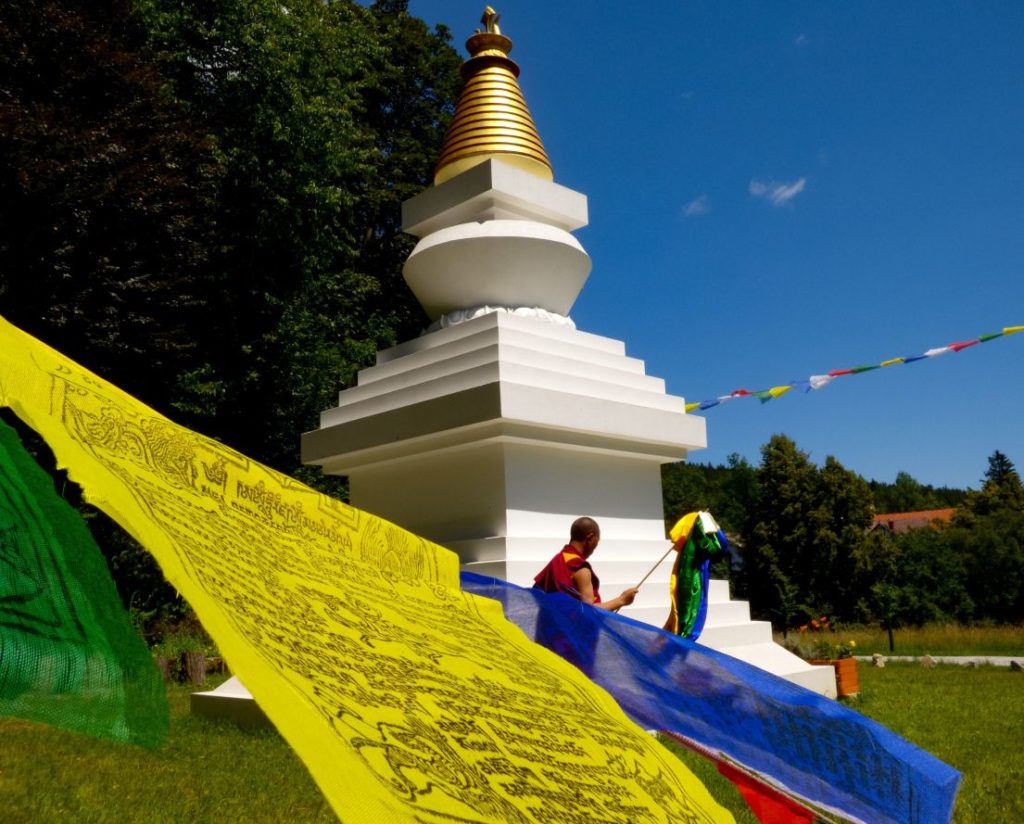
Lama Sangye Monlam, former resident Lama of Shenten Dargye Ling, and his student Sophie Frisch built a Stupa in Yeshe Sal Ling, Lama Sangye’s center in Austria, honoring a wish of Yongdzin Rinpoche. In the summer of 2022, Khenchen Tenpa Yungdrung Rinpoche and other lamas came for the consecration ceremony which was originally planned for May 2020 but had to be postponed because of the Covid-19 pandemic.

When and why did you start planning to build a Stupa at Yeshe Sal Ling?

LS: Originally, we wanted to build just a sang-khang (a hearth for the sang ritual) in the form of a Stupa, and we ordered a finial for it from Nepal with the “horns of the bird” as is used for Stupas. Yongdzin Rinpoche saw this ornament and said that we should build a Stupa, and we followed his suggestion. The inauguration of Yeshe Sal Ling by Yongdzin Rinpoche was in 2015 and this was some time after, so the decision to build a Stupa must have been made in 2016.

You have a Stupa now, but no sang-khang?

LS: That´s true, but we are starting to build one now.

Comparing the Stupa at Yeshe Sal Ling with the two Stupas of Shenten – what is the size?

LS: It is somewhere in between the sizes of Shenten´s Stupas. It is a bit smaller than the higher one and a bit higher than the smaller one. (Note: there is one meter difference between the Stupas in Shenten.)

The Stupa in Yeshe Sal Ling

How did you proceed from idea to realization? Did you follow a drawing of a model Stupa?

LS: There is a description of a Yungdrung Koeleg Stupa in the texts, and a drawing by Yongdzin Rinpoche based on the description. The main principle is that the size of each part of the  Stupa is expressed as a multiple of a unit. The unit varies. For practical purposes, it is usually chosen to be a multiple of the height of a layer of bricks.

SF: Our unit was around twenty centimeters, corresponding to one layer of bricks lying flat (6.5cm) plus another layer of bricks standing on edge (12cm) plus two layers of cement.

You called Dorje, a French practitioner who led the building of the second Stupa at Shenten, to organize and supervise the construction in Yeshe Sal Ling, is that correct?

LS: Yes, Dorje had already assisted A’u Norbu with the construction of the first Stupa at Shenten, constructed two smaller Stupas outside Shenten independently, and then led a team of volunteers who built the second of Shenten´s Stupas. He had become a very competent Stupa builder. With his experience and the help of volunteers the construction of Yeshe Sal Ling’s Stupa went very smoothly, without any obstacles.

SF: We were very lucky with Dorje and also with the volunteers, who came from the Czech Republic, Hungary, Germany, Switzerland and the Netherlands, as well as from Austria. They were very skillful  and hard-working and built the Stupa in around three months in the spring of 2019.

Stupas are filled with consecrated and blessed ritual objects; can you give some details about what is in your Stupa?

LS: Yes, there is a large number of objects inside the Stupa on different levels. The concrete base contains a triangular hole. Into this hole the three harmful emotions are banished. Khenchen Tenpa Yungdrung Rinpoche placed there a drawing of three animals representing three mental poisons: a snake for anger, a bird for desire and a pig for stupidity.

Then, the lower part of the Stupa consists of five steps, representing the five elements. Above the steps, there is a straight part, and inside, a vase dedicated to Nampar Gyalwa (an emanation of Tonpa Shenrab), containing his mantra, grains and various medicines. The vase is surrounded by other offerings, like food, and by many boxes full of tsa-tsas (tiny Stupas molded from clay, painted with gold colour).

SF: While the treasures on this level are mostly of a worldly nature,  the higher we go, the more elevated states are represented by the content of the Stupa.

LS: Above the straight part there is a platform, and inside it are mantras and images representing the protectors of Bon, like Yeshe Walmo, Mibdue, Nypangse, Menmo, etc., and also offerings for the five senses (butter lamps, incense, water, flowers, food), and tormas.

SF: Lama Sangye himself made large tormas from clay and decorated them with flower shaped ornaments, beautiful to see (but now invisible).

LS: Above the platform there are four more steps, symbolizing the Four Immeasurables: immeasurable compassion, love, joy, and equanimity.

Inside, we placed what is perhaps the greatest treasure of the Stupa: petchas (Tibetan loose leaf books) forming a complete set of the Bon Kanjur. As we were wrapping the petchas, Ponlop Tsangpa Rinpoche was just giving teachings in Yeshe Sal Ling and he helped with the wrapping of the petchas and performed one of the consecration ceremonies that mark the completion of each layer of the Stupa.

At the center of the Stupa there is the “tree of life”, an octagonal wooden pillar. This pillar, originally almost as high as the Stupa, is cut into two parts. The short part is inserted in the lower part of the Stupa, and the long part runs from the platform up to the top of the Stupa. Each part is wrapped in many kilometers of mantras, and then in khatags of five different colors.

Then, above the four steps is the bumpa (vase) of the Stupa, there is a niche facing east with a statue of Tonpa Shenrab visible through a window. Inside the closed part of the bumpa, there are small clay reliefs of Yidams, copies of Yangtse Longchen and Zhang Zhung Nyen Gyud, and other offerings, for instance, a piece of meteorite iron given by Yongdzin Rinpoche.

How did you get materials for the Stupa?

SF: You mean the material that we just mentioned? We ordered the Kanjur from Tengchen monastery in Tibet and various medicines from Nepal. Food and other offerings could be found here.

And what about construction materials?

SF: We used the bricks and cement common in Austria. For the tree of life, we bought a tree for two hundred Euro, and a carpenter who is a Buddhist cut it into shape for free. That was kind of him. The price quoted by a professional carpenter was around a thousand Euro: unaffordable.

Do you know the total cost of the Stupa, and can you share it?

SF: I lost track of the cost completely, but it was a large amount of money. Fortunately, the expenses could be spread out over a longer period of time. Everything that went inside was ordered and paid for in the course of several years before the start of the construction.

When was the Stupa finished, in all its parts?

LS: In the summer of 2019. We wanted to have the consecration soon after and planned it for the spring of 2020 but then the first wave of covid prevented it. In 2021, we had to postpone the consecration again, for the same reason.

SF: Lama Sangye performed a small consecration ceremony shortly after completion. The Stupa was properly consecrated, but there was no celebration with many Lamas and guests until 2022. In 2022, Khenpo Tenpa Yungdrung Rinpoche had time to come to Yeshe Sal Ling and the covid situation was not so bad in the summer, so we decided to have the big consecration ceremony in July 2022. On the occasion, Khenchen Rinpoche gave a Namdak initiation. He was assisted by Geshe Samten Tsukphu and  Geshe Lungrig (whom you know from Shenten), Geshe Sangye Yeshe and Tsultrim Tenzin, and also Khenzur Nyima Wangyal, who came from Paris together with his wife, the singer Gazom Lhamo. Geshe Sangye Yeshe and Tsultrim Tenzin came from Triten Norbutse two weeks in advance and did a lot of preparations. Geshe Sangye Yeshe acted as the Umdze (master of ceremonies who leads the recitations). Ani Tsultrim Sangmo assisted too. Of course, Lama Sangye himself also participated in all the rituals. The Lamas performed rituals in a tent in the garden for three days from morning to night, almost non-stop, culminating in the Namdak initiation on the last day.  We had good luck with the weather. Gazom Lhamo gave a recital the day before the consecration.

And how many lay practitioners came?

SF: Around twenty-five, maybe thirty people, the maximum number on the spot at any one moment was twenty, some came only for a part of the ceremony. People came from France, Poland, Hungary, Germany and from Austria. They are not visible in the pictures because it would have been complicated to ask everyone for permission to publish. Fortunately, nobody contracted Covid. We were very careful and tested people on their arrival.

Lama la, you have been living “full time” in Yeshe Sal Ling since 2017. What do you appreciate most about the place?

Yeshe Sal Ling is a very good place for meditation. There is pure air, it is located in higher altitude and there is a mountain just behind the center. All these are favorable conditions for practice. It is, however, a small center with rooms for only about 12-14 practitioners at the same time, and not comparable to Shenten, where sometimes hundreds of Bonpos congregate.

Photos: Maciej Czuchra


Yungdrung Tenzin: When I translate, it is a kind of shock

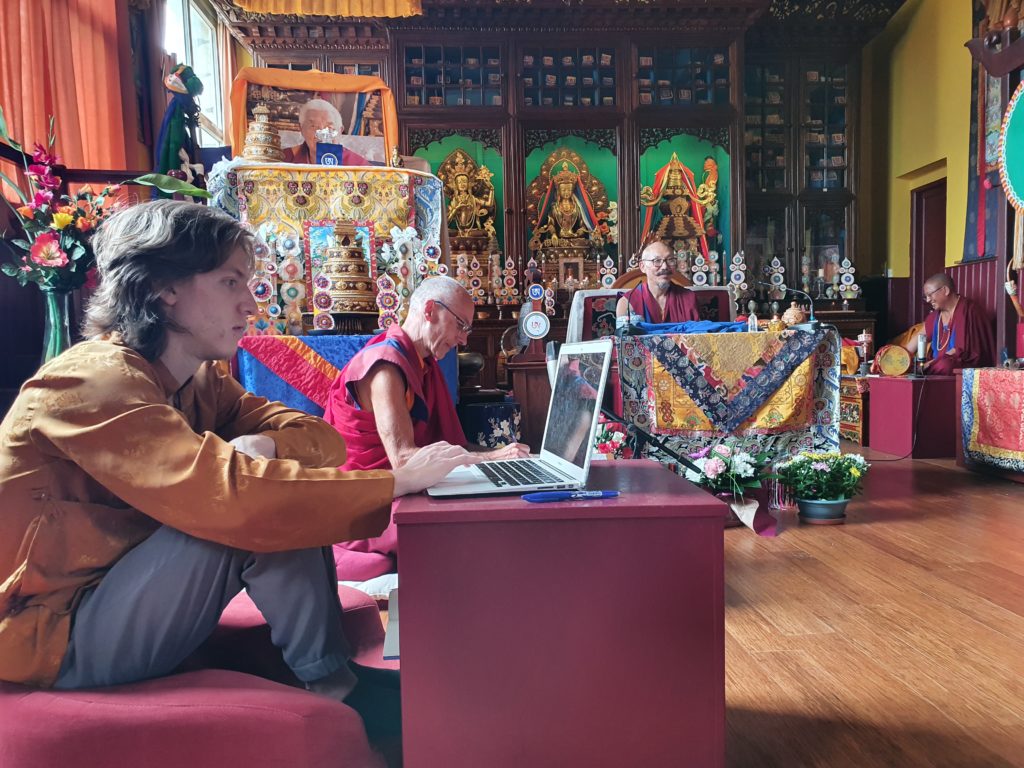
Yungdrung Tenzin – Dominique Troulay by his civic name – was translating into French the teaching of Khenchen Tenpa Yungdrung Rinpoche in this year’s summer retreat. What does the process of translation look like from his perspective? “It is a kind of shock,” he says. “The teacher starts talking and you have no choice but to listen very carefully, with absolute focus. It is a big responsibility to translate teachings, but I am happy to take this responsibility. ”

When you translate a teaching, do you know the text that the teacher is explaining?

Usually, I don´t.  I am completely open to what I will hear, and I reproduce it in French. Sometimes the teacher may digress and talk about something that is not in the text, maybe comparing it with some other text – I need to be ready for anything. I just focus on what the teacher says and convey it in French accurately. 

I see you writing a lot… 

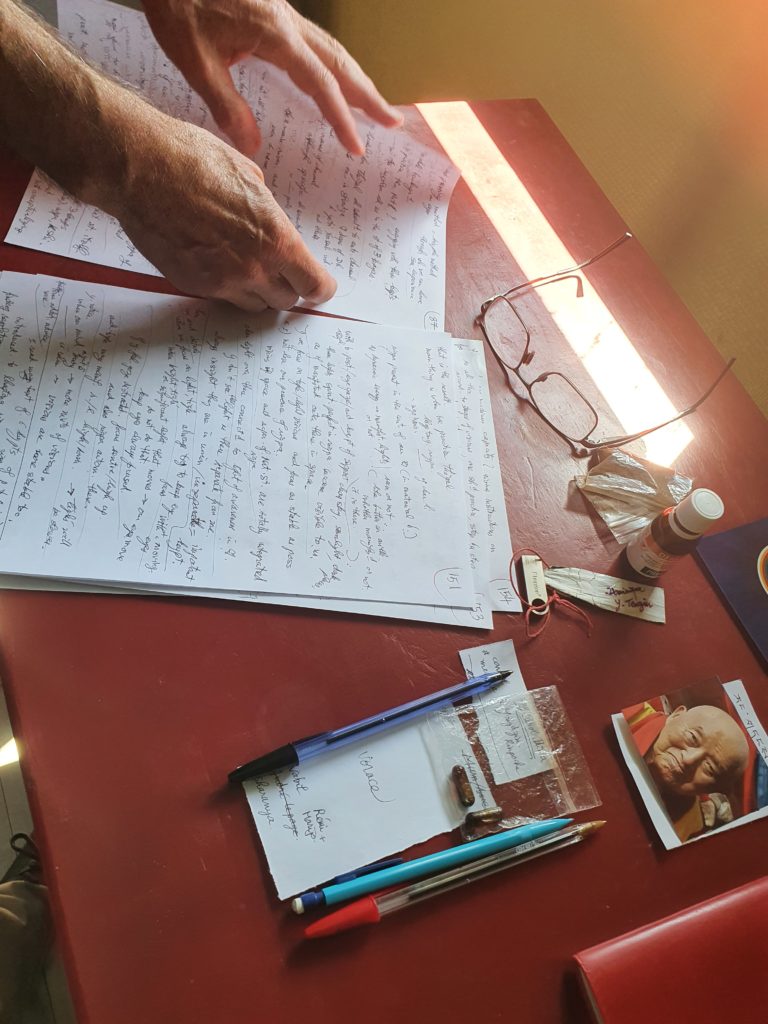
The notes are extremely important for me, I write down the maximum that I can of what the teacher says, almost every word. I want to be as faithful as I can. I feel this is a big responsibility, because what is explained is of great importance. Actually, I do not like having to write so fast, but this is the only way I can do it. My memory is weak, and I cannot keep in my mind a speech lasting sometimes several minutes. So I need to write these notes. I have written more than two hundred pages during the three weeks of the summer retreat.  In the evening I go through my notes again. It is an inspiring activity for me. But if it was possible not to take them, I would be happier. For example, if some technology could transcribe what the teacher says directly onto a screen and I could only listen – that would be much more comfortable for me. 

“In the evening, I go through my notes again.”

How do you feel when you translate? Does that kind of concentration have any benefit for you?

It is a kind of shock. The teacher starts talking and you have no choice but to listen very carefully, with absolute focus. Sometimes I have one or two seconds to listen to a bird outside, but in general I have to be a hundred percent focused on what was said and what I have to say in translation. Even a small distraction is risky. I think it is a good practice, for sure.  

It is a delight to listen to your translation, I mean it. Do other people come to you saying that they appreciate your translation?

Some people do. They tell me it helps them, even if they understand English. When they listen to my translation it helps them understand something that they did not understand or to be sure they understood well. And if some people have some doubts about what I said, I have my notes and we can check. 

Does Khenpo Rinpoche understand your translation? His passive knowledge of French seems good.

I do not know exactly but I noticed sometimes, when somebody was translating and I was just listening, that he corrected the translation at a point, which means he understood the French words that were chosen. 

“I am completely open to what I will hear.”

Khenpo Rinpoche usually waits until you finish translating, but in some cases it happens that he starts talking before you completed your translation. Is it stressful when you have to stop him?

Yes, a little bit, but I have to do it. Sometimes I also have to ask him to repeat a word about which I am not sure or I forgot it. I would rather not but it is necessary. I have to be sure that I translate accurately. It is a responsibility, but I am happy to take this responsibility. I  have big respect for Khenchen Rinpoche and devotion to him and I am very happy that I can translate for him and for the sangha. 

You translated Khenpo Rinpoche´s occasional public talks in the past, but not regular retreats. You started to be more involved as a translator when Shenten began with online teachings, is that right? 

Yes, I was not very confident about being able to do it, before and I am really surprised that I can. The online teachings during all those lockdowns were  good practice for me. I did many, many hours of translations for Khenpo Gelek and his daily sessions, and then also for other teachers.  Gradually, I gained more confidence. Online translation is simultaneous, and I like it, especially because I do not have to take any notes (he laughs).

The second part of the interview will bring a personal story of Yungdrung Tenzin, a Yungdrung Bon monk  from a Western background.

Photos: Jitka Polanská


When I clean rooms and do laundry, I recite A KAR A ME, Cristela says

Cristela Trujillo has been coming to Shenten since 2008 and everyone knows her magic hand. She is a karma yoga queen. When she became in charge of the laundry, sheets and towels stood in no time in perfect, one-color stacks and the place changed its vibes completely. And when she cleans rooms, as quick as wind, she purifies herself too. 

I have been living in New York for quite some years. I do mainly housekeeping and baby-sitting. I have several jobs at a time, actually, to earn as much money as I can (she laughs). I came to the city when the owners of the store in Valle de Bravo, where I worked for a long time, had to close their business. There was nothing to do in Valle de Bravo and narcos began arriving in the area. I thought the time had come to go and try something different, somewhere else. I knew New York because I had lived there when I was young, with my husband and my little daughter. She was two-year old at that time. The marriage did not work well, and we decided to split up soon after. I moved back to Mexico, to Valle de Bravo because my mum is from there. I started to work there in a gym, as a spinning trainer, and in my spinning classes I met a nice lady. We became friends. 

She was the owner of the store selling ethnic furniture. One day she asked me if I could take care of  her business for two months because she was going on holiday abroad with her family. I said yes. The shop kept me busy only at weekends, while during weekdays I still worked at the gym. When she came back, she offered me a steady job with her because she was happy with how I had managed. And sometime later, she invited me to join her for meditation in her friend´s house. Finally, one day she asked me if I wanted to go with her for a retreat. I said yes. Why not? It was a retreat dedicated to Red Garuda practice with Tenzin Wangyal Rinpoche,  in 1999.  I liked it, I felt very connected right away with the teacher and the teaching. Bon seemed to me like something close and familiar. 

Since then I continued going to a retreat every year, and I went to group meditation with my friend  every week. In 2008 the Mexican group of Bon followers invited me to come with them to Shenten. I did not feel like going. I had surgery to remove a cancer two months earlier and I was very weak. They insisted that I should come, and offered financial help. That year the teaching was about the healing practice of Yeshe Walmo. So I joined them. 

When I saw Yongdzin Rinpoche for the first time, it was a shock. I felt fire in my chest. It was very touching. I remember me, during the teachings, leaning on the wall in the gompa, very weak, sitting still, my heart filled with this strong, special, emotion of awe. It was a kind of love for Yongdzin Rinpoche. I cannot explain in words what I feel each time I see him. And each time that I come to Shenten I feel his presence. When I see his photo, wherever I am, it is as if he is looking at me.

That time, when I came to Shenten, I also spoke with Khenpo Tenpa Yungdrung Rinpoche, I told him about my illness, and he said: keep your practice of Red Garuda. I did not tell him about it, but he knew somehow.

When I was leaving Shenten for Mexico, I promised to myself: I have to come back, this must not be my last time here. But I continued having health issues and my condition did not allow me to come the following year. In 2010 I would have loved to come when His Holiness and Yongdzin Rinpoche were at Shenten together, but I had my second surgery. My Mexican friends all sent me photos from Shenten, and I followed events from a distance. I remember being  happy.

I only came back to Shenten in 2013 and I felt immediately at home again. Each time I come to this place it feels like coming home. From then on, I came in 2015, and 2016… every year. 

I always try to do something for the place, offer my help, mainly cleaning. To me it is like cleaning my house, and I really love cleaning a place where Yongdzin Rinpoche spent so much time. In 2017 organizers of the summer retreat asked me to take care of the laundry. It was my pleasure. 

The laundry of Shenten has changed its vibes under Cristela´s magic hand. Shenten, August 2022.

In 2018 I decided to take a year off work and go to do a work retreat where I was needed. I saved money for that beforehand. First, I went to the center of Tenzin Wangyal Rinpoche, Serenity Ridge, in Virginia, and I met Khenpo Tenpa Yungdrung Rinpoche there. He came to teach. From there I moved to Kathmandu and continued my  karma yoga at the monastery. Finally, I arrived at Shenten. It was in April and there was nobody there, only Khenpo Gelek and Geshe Samten. Then, Yongdzin Rinpoche came. It was his last year at Shenten. I spent several months in Shenten in his presence, and it was a blessing. I saw him every day when he went out in the afternoon. When he passed by the laundry, going back, he would say “goodbye” to me. I was very lucky. I knew that his room was just above the laundry  and I worked with joy in my heart. 

In October of that year, Shenten organized a big ceremony of DUTRISU. I took part, and since then reciting A KAR A ME Du TRI SU is my constant practice. I clean and recite the mantra. I still have some health problems and I have to be careful. When my body tells me to stop, I have to take a rest. But my illness is in remission, and I am confident in my practice. In general, I have lots of energy and I like moving, working. I am  very focused on what I do and I recite the mantra with it. This is meditation for me. While I am cleaning a room or doing laundry I  purify myself.

Cristela: “In general, I have lots of energy and I like moving, working.” Shenten, August 2022.

Photos: Jitka Polanská


Language of prayers is difficult to understand, Ponse Yigme Tenzin says

Tulku Ponse Yigme Tenzin has been recognized as the reincarnation of Lopon Sangye Tenzin, the teacher of Yongdzin Tenzin Namdak and the first Lopon of Menri monastery in Dolanji, India. This led him to study Tibetan language so that he could understand and eventually teach the doctrine of Yungdrung Bon. This is the second part of an interview which took place in August of 2022.

How long did it take you to learn Tibetan language to the level that you can read texts of the teachings?

It took many years, actually, but with interruptions. I started very early, when I was five or six. Lamas and geshes used to come regularly to my home, and some of them had been teaching me Tibetan. I started with the Tibetan alphabet when I was six, and then they taught me how to read uchen and ume. Uchen is a Tibetan writing used in printed, western style books. Pecha books, the traditional Tibetan books with separate pages, are written in ume, which is similar to uchen but you have to learn it as well, by only knowing uchen I could not read ume.

First you are a tulku just by the name, but then you have to earn it

“One day, when they were already in Menri, it was raining and my father found a shelter on the porch of a building of the monastery. He did not know that the building was the house of His Holiness Menri Trizin. When it stopped raining, His Holiness came out and asked my father: “You are Jorge Valles, aren´t you? I just came out of a three-day long meditation where I was asking for signs, and you are the first person I met after I left, and you see, there is not one, but two rainbows in the sky, stretching from east to west.” This is how my father tells the story. Also, His Holiness pointed out to a cuckoo sitting on a tree nearby, which is considered another auspicious sign.”

When I was seven, I started to go to the Menri monastery for two three months each year, together with my parents. When I was twelve, I spent an entire year there, on my own. It was then when I started to study in a more consistent way. I had four classes per day with my tutor: reading, grammar, some degree of comprehension, and writing. Then I had also ritual classes: how to perfom Yeshe Walmo and gom cho nam sum and chod. After one year my Tibetan improved a lot.

Then you had to finish the school in Mexico…

Yes, I came back to Mexico and continued my school. Then Yungdrung Tsultrim, my tutor from Menri, went for one year to Mexico, and I studied with him at home. Not so intensely as at the monastery, because I had to combine them with my regular school. After he left I did not have any regular classes for some years, I just went to the retreats and spent time with monks trying to understand them. But honestly speaking, my Tibetan was still quite poor. I could read since I was very little, but the meaning was not there. And I could talk only about very superficial things.

When I finished my high school, I went to Lishu Institute in India for three months and then I studied at a university in Mexico Financial administration. For my fourth semester I went to Budapest to an affiliated university. I was there when Holiness Menri Trizin passed away, he entered the parinirvana in 2017. 

I went to Menri monastery for the funeral ceremony, after quite many years that I had not been there. That time Menri Ponlop Rinpoche and Chongtrul Rinpoche and other lamas encouraged me to deepen my studies of Bon. It was their impuls that made me take a decision to learn Tibetan properly.

I searched for a good school for that, and I was advised to go to Lotsawa Rinchen Zangpo Translator Program in Dharamsala, India, by a few people whose opinion matters to me.

Tulku Ponse Yigme Tenzin at Shenten Dargye Ling, August 2022

What is the studying program there?

It is two years of intense training in the school in India followed by a two-year course for translators done more practically and outside the school. Usually people become translators of Tibetan teachers into other languages enroll. I enrolled only for the first part, in the years of 2018 and 2019. The program starts from the very beginning and for about two months, I could use my previous knowledge, but not more. When the second module began, it was all new for me. The first year we studied modern, colloquial language. The classical Tibetan was taught only once a week and not very well, I built my knowledge mainly by myself, I studied many manuals of classical Tibetan on my own. To learn grammar and structure of sentences does not take so much time, for classical Tibetan. The hard part starts when one has to interpret what the texts say. We studied a text from the Gelugpa tradition, to which the school belongs, Lam rim chenmo, Stages of the path to enlightenment. 

The second year we had classes only in Tibetan, and when I completed eight modules out of nine, I felt that I was ready to continue my studies in the Bon tradition, and I went to Triten Norbutse. 

Do you still need a somebody´s help to understand a text?

Yes, in each text there are words for which I need an explanation. Also, sentences in the texts of teachings are quite long, some cover several paragraphs, and the verb is always at the end, so you need to read the whole sentence before you catch the meaning. With lots of practice, it comes. I am also in the Shedra, the two-week dialectical course organized by Shenten. We read a quite difficult text, Salaam –Path and Stages to Enlightment, written by Nyame Sherab Gyaltsen. 

I realized that sometimes can be easier to explain a part of the text than to translate it. Translating needs to be close to the text and some figurative expressions is really hard to deliver. The traditional texts are also written in a very concise, condensed way.

There is a tendency of omitting some words which then should be deduced. This of course applies to lots of texts of the teachings written in the antient times. For example, I was just studying a text with Khenpo Rinpoche from the first of Nine vehicles of Bon. There is a word – sung-wa – which means to protect something, to guard something. Sometimes in the text it is used in a way that it may seem that you should protect yourself by doing wrong things, but this only because a particle is omitted, while it means, in that context, that you should protect yourself from doing wrong things. For this, you need an explanation from someone knowledgeable. 

Is the language of the prayers even more difficult to understand? 

It is. Understanding a text of teaching is comparably less difficult than understanding prayers. Old prayers are written in verses and some omission in the prayers are due to the need to have the same number of words, or syllables, in one verse, for example. That´s why translating prayers is very difficult. Sometimes key words or concepts are missing, and you have to understand them from the context or experience and add them in the translation.

Lopon Sangye Tenzin Rinpoche was the first lopon, or head teacher, of Menri Monastery in India.

Born in 1917 into the Jyab ‘Og family, an esteemed lineage within the Bön tradition, he lived his early years in the nomadic region of Hor, Tibet. He studied for many years in the Drepung Monastery of the Gelug tradition, as well as under masters of other schools of Tibetan Buddhism. He became an accomplished master of sutra, tantra and dzogchen. He lived a simple life, much of it in solitude, yet he was considered by many to be the greatest Bön scholar of his generation.

Photos: Jitka Polanská


Ponse Yigme Tenzin: First you are a tulku just by the name, you have to earn it

Tulku Ponse Yigme Tenzin has been recognized as the reincarnation of Lopon Sangye Tenzin, the teacher of Yongdzin Tenzin Namdak and the first Lopon of Menri monastery. How did it happen and how does he feel about it nowadays when he is twenty-six years old?

You met the Yungdrung Bon at a very young age and in very unusual circumstances: you were recognized a tulku, a reincarnated lama, as a new-born child. Can you explain how it happened?

My parents were both catholics – Mexico is a catholic country – but they did not feel quite comfortable  with this religion, and they had this in common when they met. They had lots of questions and were not satisfied with the answers they got. Also, they felt there was no method to do anything, as if you are just supposed to pray for things to happen but there is nothing you personally can do to make it happen. These dissatisfactions led them to search for some other source of spirituality. Those years, Namkhai Norbu Rinpoche used to come to Mexico to give teachings on Dzogchen every year. I do not know how my parents got interested in this kind of teaching, they had found out somehow.

In 1995 Namkhai Norbu was sick and he recommended to the local organizers to invite Tenzin Wangyal Rinpoche instead. They followed the advice and Tenzin Wangyal gave a teaching in Mexico City in May that year. My parents could not go but two people of their hometown, Chihuahua, went to the event and when they were back home, they said to my parents that they liked the teaching very much and that they invited Tenzin Wangyal Rinpoche to teach in Chihuahua the following year, and that he accepted, to their surprise. They had no experience with organizing retreats and also little financial resources so they were a bit worried about how they would manage. My parents reassured them that they would help: they bought the flight ticket for the lama and offered to host him at their place. Tenzin Wangyal Rinpoche came to our home in September of 1995. It was the first time my parents met him and connected with Bon.

It was Tenzin Wangyal Rinpoche who indicated you as a tulku, right?

Yes. He arrived in Mexico the following year, in September 1996. I was born one month earlier. He stayed again at our house and told my parents that before coming he had dreams in which Lopon Sangye Tenzin, who was also his teacher, appeared to him dressed in Western clothing and told him he was going to reincarnate in the West. Later on he had more dreams which led him to think that his teacher would reincarnate in our family. At the same time my mother started to have unusual dreams as well. She practiced guru yoga a lot and got very connected to this practice.

Lopon Sangye Tenzin Rinpoche was the first lopon, or head teacher, of Menri Monastery in India. Born in 1917 into the Jyab ‘Og family, an esteemed lineage within the Bön tradition, he lived his early years in the nomadic region of Hor, Tibet. He studied for many years in the Drepung Monastery of the Gelug tradition, as well as under masters of other schools of Tibetan Buddhism. He became an accomplished master of sutra, tantra and dzogchen. He lived a simple life, much of it in solitude, yet he was considered by many to be the greatest Bön scholar of his generation.

Source: www.Ligmincha.org 

Tenzin Wangyal said to us that he informed Yongdzin Rinpoche and Menri Trizin about those dreams since they were the only authority which could confirm that the dreams were carrying an authentic message. They both were a bit skeptical about it because it did not make sense to them why Lopon Sangye would reincarnate in Mexico, instead of Nepal or India. But the dreams contained some convincing signs and so both Yongdzin Rinpoche and Menri Trizin started to look for signs themselves.

In February 1997, when I was six months old, Tenzin Wangyal Rinpoche organized a trip to Menri monastery which my father joined. One day, when they were already in Menri, it was raining and my father found a shelter on the porch of a building of the monastery. He did not know that the building was the house of His Holiness Menri Trizin. When it stopped raining, His Holiness came out and asked my father: “You are Jorge Valles, aren´t you? I just came out of a three-day long meditation where I was asking for signs, and you are the first person I met after I left, and you see, there is not one, but two rainbows in the sky, stretching from east to west.” This is how my father tells the story. Also, His Holiness pointed out to a cuckoo sitting on a tree nearby, which is considered another auspicious sign.

At that point, did the lamas and the family accept the reincarnation as a fact?

Yes, they did. And when I was three years old, I went to Menri Monastery and Triten Norbutse to be enthroned as a tulku, I took refuge and received my Tibetan name. 

This must have turned the life of your family upside down.

I think my parents together with Yongdzin Rinpoche and His Holiness handled everything wisely. Traditionally, when a tulku is recognized the family gives the child to the monastery at the age of two or three. My parents did not want to do this. They agreed to having lamas around their son and accompanying him to the monastery for a certain period every year, but  before agreeing to more than that they wanted to wait until my discernment was strong enough so that I could decide if this is what I wanted.

I remember that when I was nine, I spoke with Yongdzin Rinpoche during my stay at Triten Norbutse, and he said to me: “How about spending a year at Menri after you finish middle school and before going to high school?” And this was what we, my parents and I, decided to do. As I said, when I was twelve, I went alone to the monastery for the first time and stayed there for the whole year.

I think this was a good approach which avoided risks that this condition could have brought. I read a book about tulkus born in the West. Most of their families followed the traditional Tibetan way and delivered the little child to the monastery, but when they became teenagers, they dissociated themselves from it all and wanted to go back to the West and live a normal life. They felt like someone stole their childhood from them. And this happens not only to the Westerners, but sometimes to Tibetan tulkus too.

His Holiness Menri Trizin and Yongdzin Rinpoche also emphasized that I needed a good secular education as well. When I finished the year´s stay in the Monastery, His Holiness told me: “Now you go to Mexico and finish all your studies. Go, play, enjoy life there and then come back and continue your studies.”

Do you think that being a tulku has helped your development as a human being and as a practitioner?

Yes, I think so, although in some periods of my life I had my doubts about all these things, especially as a teenager.  I was thinking “what do I want to be in the future?”  Being a tulku seems so much out of “Western” context, I would say. I felt that the responsibilities and expectations were sometimes heavy, I felt overwhelmed with all that pressure. People coming and telling their stories of how they have a good connection with me… Also, the assumption that I would become a teacher, assuming that I must become one. The pressure was pushing me on the wrong side, putting a question in my head “what if I do not become good enough?”. But when I engaged more deeply with the teaching, with a good knowledge of Tibetan, I started really to appreciate the opportunity to absorb all that knowledge. This tradition has an incredible insight in epistemology, the way we know things, how thought works… I like the philosophical aspect of the doctrine very much. It is uniquely profound, and unknown largely in the West.

Tulku Ponse Yigme Tenzin at the teaching of Khenchen Tenpa Yungdrung at Shenten Dargye Ling, August 2022

Is the institution of tulkus emphasized in the Yungdrung Bon tradition? My impression was it is less important in Bon than in other Tibetan schools.

It is only my opinion, I do not know much about it, but I think that the difference is that other Buddhist schools think that just by being born a tulku one has all the necessary favorable conditions, while Bon insists on the fact that you still have to create all the conditions. You have to study, you have to learn. You are a tulku by the name, but you have to earn it, to become it by heart. But I am not sure if this difference really exists. Being born as a tulku is a karmic seed that has to meet the necessary secondary conditions.

You chose to study financial administration at the university. Why not philosophy, or Tibetan studies? Was there any particular reason for it?

In Mexico no university offers Tibetan studies, so I would have to go to the US or Europe. Also, I was always very good at math, it was my favorite subject at school. That was one of the reasons. Another reason is that my father has a construction company in Mexico, he is an engineer by education. My sister and my brother have artistic inclinations, my brother studied cinematography, my sister is a fashion designer. Neither of them wanted to administer the family company when my father retires. It was always said that I would be the one who would run the family business and I was always ok with that. But it would not have been necessary to go to the university, I could have learned just by spending time with my dad.

There was another reason why I entered the university in 2015. It was my plan B. At that time, I was applying for a visa to India in order to go to the Lishu institute for three years, but the process was very difficult, the visa did not arrive, so I registered to the university to avoid wasting time in case I will not be given the visa at the end. I will have to study a lot in my life, and I did not want to lose a year. If I had got the visa, I would have got tuition fees back. Then, I went only for three months, because I did not get the visa for a longer period and continued to study financial administration. I cannot say that I did not like the studies, I liked them.

Besides that, both Yongdzin Rinpoche and His Holiness always thought that I should have a degree from a western university. Every time I went to see them, they asked about it. They were saying: “How is it going with your university? Have you already graduated? You have to graduate!”

What is your plan for the next decade?

I do not like planning too much ahead, especially since that time when I did not get the visa. I had a plan to go for a three-year course and it did not happen, which disappointed me a lot then. After that, I told myself I was not going to plan my life more than necessary, possibly just for one year at a time. Next year I want to go to Nepal and stay there for up to three years. After that, I would like to come back and start being more involved in the family company and in teaching the Bon to others. This is the plan, but I will see how things will turn out. The objective is to pursue my Bon studies and to work for the company at the same time. I have to see how to manage it. Besides that, I also would like to study philosophy at a university.

You are at an age when relationships and searching for a partner are very important. Is there space in your life for it?

I just came out of a relationship. We were together for almost one year and it was my second girlfriend. They both understood that this is what I am, and they knew that there would be a time when I would go to India or Nepal and spend a few years there. And when I am there, I usually shut my chat to avoid being distracted. When I was in India in the translators´ school, I deleted my social media and changed my phone number, because I really wanted to immerse myself in learning.

I personify the Bon tradition, the way I act is according to these teachings, I also want to be a teacher of Yungdrung Bon one day. My partner will have to agree with all that. So, if it is meant to happen, it will happen. I do want to have a son, my own or adopted one. The teachings  often speak about the mother and the child and about a special, unique character of their love, and I want to experience this kind of love.

photos: Jitka Polanská

the second part of the interview:


Cédric, Shenten´s IT man: I´ve always been in favor of online teaching

Cédric Hubaux is the person who has built Shenten´s infrastructure for the online teachings. He is launching, supervising and troubleshooting all of the streamed teaching sessions. “Especially at the beginning it was quite stressful. Everything was new, the internet at Shenten was very bad, and I had to instruct Khenpo Gelek from a distance on how to do as I could not go there,” he says.

Cédric, do you remember exactly when Shenten started its online teachings?

Just after the first lockdown in France began, in the first half of March 2020. I would say on the 17th March, I would need to check. The first one was Khenpo Gelek’s one hour teaching and practice session which then became the regular and popular “DailyGelek”, and later “DailyShenten”, when other lamas from Shenten started occasionally to take part in it.

DailyShenten accompanied all of us through all those difficult lockdown periods and it was free of charge for the whole first year; Khenpo Gelek taught every day and his sessions were only interrupted when there were other teachings on the program.

People from around the world responded with lots of enthusiasm and support. At the start of those teachings we had close to three hundred attendees for each session, later between one and two hundred people showed up for a session.

Most of us had never heard about zoom until the online teachings started. Did you have an experience with a streaming platform before?

Absolutely not. But I knew that zoom was already being used by some other centers before the covid. Privately people used skype mostly, and messenger, but these two do not allow to organize webinars.

As the situation with the covid worsened in February 2020, the Council of Association Shenten Dargye Ling started to discuss with Khenpo Gelek the possibility to stream teachings from Shenten.

And we agreed finally that we should do it. We collected some info about various platforms existing – it was a very quick search only – and we decided for zoom.

You had to learn quickly how to manage the system…

Yes, I remember that for a few days I was fully immersed in the youtube tutorials, trying to figure out how it all works and how to make it work for our purposes. Translations were a difficult part of it; how to organize them. When we started, people faced some difficulties on how to connect with zoom. All the attendees had to be connected to their own zoom account in order to be able to join the webinar, but many weren´t and just clicked on the link and it did not work. Now it is not necessary anymore to be logged into the account and problems are much less. Sometimes they still happen with the translators.

You have been the main technical support of all the infrastructure for streaming. Is it an enjoyable, or a stressful experience?

Especially at the beginning it was quite stressful. Everything was new, Internet at Shenten was very bad, and I had to instruct Khenpo Gelek from a distance on how to do. I had to install apps on Khenpo´s computer, using a remote control for it. I remembered that there was a webcam somewhere at Shenten but I was not sure where it was, so we were on the phone with Khenpo Gelek and I was guiding him to various places where it could be, until we found it. I was thinking constantly about how to improve this or that. My head was full of ideas, but I was far away, there was a lockdown!

As soon as we were allowed to travel, I went to Shenten to improve things. We added a better mic, a bigger camera. I worked quite hard to put the wifi in important places of Shenten. And later, I think it was just before the third lockdown, I could put the wifi close to the gompa and the streaming was done from the gompa since that time. It was a surprise for people attending and I remember that many were happy to see the gompa. 

You were a fan of streaming from the very beginning, right?

Yes, I was in favor of it two years before the covid arrived. The Dutrisu ceremony in 2018 was partially streamed, because I had insisted, it was a kind of test of what could be done with it. I have always liked the idea of giving teachings online and I suggested it a few times to both Khenchen Rinpoche and to Khenpo Gelek. But before the pandemic they both strongly refused. I remember that they were very much against it. Two years later their attitude changed because we were forced by the circumstances. Now I think both of them see advantages of teaching online.

There are advantages but also risks, would you agree?

Actually, I do not see many risks and instead I see many opportunities.  What I have seen as a risk was just that many people could connect through one computer and doing so they could watch the teaching for free. And I was also afraid that if we introduced the online teaching, less people would be coming to Shenten physically, and this has happened, we are facing it this year. (Note: for example, Khenpo Tenpa Yungdrung Rinpoche´s teaching held traditionally in April was attended onsite by around 25 people this year, while in the past it was double and more).

With the streaming, more people have access to the teaching for less cost, which is good. On the other hand, there are less opportunities to correct misunderstandings when people listen from their homes, instead of coming physically to a place where there is a community of teachers and practitioners.

For many people coming to Shenten is quite costly. Some could not come even if they wanted to. Now there is a possibility to listen to so many more teachings, compared to the time before. Considering all the factors together, I would say it is better now. But it is a bit weird for me to see Shenten emptier than before, I had got used to lots of movement there, lots of people spending time together. This year, during retreats, Shenten is more quiet.


Yungdrung Dargye: Taking care of Shenten´s green is not always easy

Yungdrung Dargye – Guillaume Lassalle took us for a walk around the area of Shenten and talked to us about its various flora. “I am very fond of all kinds of plants, medicinal plants, fruit trees, vegetables, whatever.  In my family, we all like plants very much, and since I was a child, I learned about them. I also studied agriculture. Here at Shenten, this knowledge can be useful,” he says. 

Shenten is a very large property and taking care of all its green space is not always easy. We do what we can, for now, but we can do even better!  Plants provide us with food and they can decorate our environment, including our temples. So instead of buying flowers for pujas, we can decide which plants we want to cultivate, choose the healthy ones, those with long lasting perfume, and use them in our interior spaces at Shenten.

Let’s start with the area which is behind the dining hall. We have tried to build a vegetable garden there.  Next to it, we planted a small vineyard; about five years ago. It is a special ancient French variety of grapes, very perfumed and with a fine taste. This year, we built supports for the vines which will give them a good exposure to the sun. 

Next to the vegetable garden, there is an orchard. I planted most of its fruit trees. There are several different varieties: plum, apricot, cherry, and apple trees. Before there were peach trees but many of them died. Grass competes with the roots of the trees, and peach trees are a bit too weak, they do not live long and can die easily, so they did not survive the competition. Three or four died. 

This year, we pruned  half of the fruit trees in this orchard, so more sunlight can easily reach the inside branches of the trees. We will do the rest next year. I hope the fruits are not destroyed by the early frost this year as has happened in the past year. At least the cherries should be safe, as they blossomed after the big frost that we had this spring. 

Continuing our walk, you can see that we planted some fruit trees recently next to the pigeonerie and we have also saved some of the very old rose bushes on this side of the chateau.  

Now we are entering the allée of the lime trees – which is part of the cora around Shenten. You can see that the crowns of these trees are not as full as before, as we were required to cut some of their branches due to electric wires with internet cables passing too close to them. However, the branches will be back again, within two years, as they grow quite fast. I hope the trees will all survive and in good health this big intervention. It could not be avoided, we must obey the law.

The big sequoia, the tree which one can see from a distance when arriving at Shenten and which everyone who has been here knows, is around one hundred fifty years old. It was once struck by lightning, about twenty years ago or so, and its crown burnt at that time. Otherwise, it would have been even more impressive than now. We all love this majestic and noble tree.

“Next to the pavillon, on the right side of the road that goes from the parking lot to the hearth, we have another orchard.”

Lime trees form also the central allée which unites the parking lot and the entrance to Shenten. In the spring these trees all have green sprouts which are edible. You can try! It is like lettuce salad!

Next to the parking lot and along the cora you pass by bushes of lilacs. They have had some difficulties growing there because of many stones in the ground – the same stones that were used to build the chateau. Perhaps,  originally, there were the walls protecting the castle. It was difficult to dig holes to plant the lilacs there and also for their roots to make their way through stones. I have to help them to grow, with some natural fertilizers like dead leaves, or lawn mowing clippings and sometimes even nettles.

In the space between lama’s wing of the chateau and the parking place, on the right side from the central allée, we have chestnut trees and walnut trees. We have more walnut trees on the other side of Shenten, near pigeonerie. Those have even better exposure to the sunlight. Yongdzin Rinpoche used to crack walnuts from these trees, in the afternoons, while sitting on his white bench next to the laundry. 

Located  between the new stupa and Rinpoche´s room, there is a tree that Yongdzin Rinpoche planted, a ginkgo biloba. Ginkgo biloba is a survivor; plants of its species lived on the earth hundreds of millions of years ago.

On the walls of the lama’s wing of the castle, also facing the new stupa, there are white roses with a very nice perfume. They blossom even in the shadows, which is why they were planted on the northern side of the building.

Next to the pavillon, on the right side of the road that goes from the parking lot to the hearth, we have another orchard. Here, we planted around twenty trees, quite recently, Christophe and me.  We will have mirabelles, apples, apricots, peaches,  pears from those trees. 

We also have many aromatic plants at Shenten: fennel, salvia, rosemary, lavender, along with many flowers. 

People bought flower plants earlier this year for Shenten and gave them as offerings:  Lowell, Huguette, Alexandra, and others.  Khenpo Gelek planted many flower plants along with other Shenten lamas who helped him.  

Lowell Britson and Yungdrung Dargye choosing flowers for Shenten, during the retreat with Khenpo Tenpa Yungdrung Rinpoche in April 2022.

We also have many juniper and cypress trees at Shenten. We cut and burn their branches in the hearth, at the daily morning sang offerings. These trees need to be shaped anyway.

Anyone who has been to Shenten knows there is also a palm, in a quite central place, between the two wings of the castle. The school that earlier owned the Shenten property encouraged gardening and their students planted this palm. It was very small when we arrived here but it has now grown quite large. It is a resistant variety of palm, which can survive in the frost, up to minus fifteen degrees.

In the small gardens, quite close to the palm tree and next to the laundry, dahlia flowers used to grow. These flowers were much loved by Yongdzin Rinpoche. Now there are not so many, but we will plant them again. During the pandemic, the gardens had less care than needed, as it was difficult to keep up on the usual maintenance. But now we are getting back to normal, with our joint efforts.

“Getting back to normal, with our joint efforts.”

photos: Jitka Polanska


The key to Dzogchen is the Ngondro, Ponlob Tsangpa Tenzin says

“Gyalwa Chaktri is an experiential text. Its author, Dru Gyalwa Yungdrung, describes stages in his own practice which led him to a full realization  – and the manual begins with the Ngondro,” Ponlob Tsangpa Tenzin Rinpoche says, to emphasize the importance of the preliminary practices in Dzogchen. Gideon Makin, the editor of Rinpoche´s book about the preliminary practices published last year by Vajra books, kindly agreed to present our questions about the Ngondro to Rinpoche on the occasion of his teaching at Shenten in May 2022. Khenpo Gelek Jinpa kindly agreed to be a translator of the interview.

Dzogchen teaching says that the Dzogchen meditation on the natural state is the most powerful way to purify one´s mind and to remove afflictive emotions. It is said to be one medicine for one hundred diseases. Rinpoche, how would you explain to the Western students of Dzogchen that even if this is true, the preliminary practices should not be neglected? To them, they might seem less effective and harder to do.

Yes, the Western students sometimes come to me and say that they do not like the Ngondro much and do not find the will to practice it. They love Dzogchen, they say, but they do not like the Ngondro. This attitude is mistaken. In Dzogchen, there are three different categories of practitioners, depending on their capacity: practitioners of the highest capacity, of the medium capacity and of the least capacity. Those who fall in the first and second class do not need to practice the Ngondro. But those practitioners are rare, among one thousand people you can find not more than one. The vast majority of practitioners fall into third class and need the preliminary practices which are the key to the Dzogchen practice. Ngondro is like a pot which contains an essence – the Dzogchen practice. It is like a foundation of the house. Ngondro is very, very important.

Gyalwa Chaktri, the commentary and practice manual of Zhang Zhung Nyen Gyud Dzogchen cycle, was based on the  author´s experience with the Dzogchen practice. It is not an intellectual construction, it is an experiential text, and it begins with the Ngondro. After practicing it, the realization of Dru Gyalwa Yungdrung developed and he moved to the practice of the fixation of the mind. After mastering it, he moved to the practice of Tregcho, and finally, he practiced Thogal. He built his realization gradually and in this way he reached his result.  That´s why I really felt it was important to start my teaching in the West with Ngondro, and I am very happy that the teaching was transcribed and made into a book released by Vajra books. After it was published I received messages from the Western students saying to me that they found the book very interesting and that it made them realize the importance of the preliminary practices. I am thankful to the people who made this possible, Sangmo Yangri who translated it and Gideon Makin who edited it.

When do the monks do their Ngondro, at the monastery? They are usually very busy with their studies. Are they given a period of time for it? And is it a condition for being introduced to the main practice?

At the monastery, there are two groups of monks and two courses of studies: some monks study at the Gomdra, the meditation school, and the others study philosophy, at the Dialectic school, the Shedra. While Gomdra is experiential, the students of the Dialectical School start with Sutric philosophical texts, cosmology and close subjects, and then continue with the Vinaya – a monastic code of conduct. They also study poetry and master various rituals, over ten years of studies. In the eleventh year, before entering into the class of tantric studies, they have a fifty day retreat during which they are supposed to complete their Ngondro. They are not allowed to leave the monastery in this period and are encouraged to practice Ngondro intensively, which means to accumulate one hundred thousand repetitions of each of the nine practices. Only then are they introduced to the natural state and receive the teachings on tantra and Dzogchen which follow. The complete curriculum of studies lasts thirteen years and for some students even much longer.

Also, the students of Gomdra have to complete the Ngondro, during a four year program. Usually they are supposed to dedicate one hour a day to it, as their first activity of the day, very early in the morning. The monks receive instructions and recommendations of Yongdzin Rinpoche who always stresses the importance of the Ngondro to them. If you want really to understand Dzogchen, you have to go through the Ngondro, he says to them.

Rinpoche, if it is comfortable for you, please share with us how you approached the preliminary practices and what kind of benefits you noticed.

I did my Ngondro when I was eighteen years old and I followed the text of Kalung Gyatso of Shardza Rinpoche. It is a commentary of the Atri Dzogchen Cycle dedicated to Ngondro. And I definitely felt the impact of the practices like contemplation on impermanence or Bodhicitta on my mind. My mind was really changed, it developed devotion and trust in the teaching. The practice has a very positive effect on the mind, without any doubt.

What are you in charge for as the head teacher of the monastery?

Generally speaking, I am responsible for the education of the monks of the Dialectic school, and specifically I focus on teaching higher classes of the thirteen-year curriculum, I teach the subjects that come in the eleventh, twelfth and the thirteenth year of the studies. Monks study in different classes and I teach each group for one hour a day, which is usually three hours a day, in the morning. No tea break between the classes (Rinpoche smiles).

Ponlob Tsangpa Tenzin Rinpoche at Shenten Dargye Ling, May 2022. Photo: Christophe Moulin

What is the schedule of the monks? How many hours a day do they receive the teaching?

Usually, the monks start their day at around seven o´ clock in the morning. Their schedule includes classes in philosophy, personal studies and debates till lunch. At three thirty they continue with other subjects, like poetry, for example, and they again practice philosophical debating. If they have no group program they are supposed to study or accumulate Ngondro repetitions.

For how long do the monks study each subject?

Usually for one year.

Do you also give some teachings to Tibetans who are not monks? If so, what kind of teaching do they receive and in which way?

Yes, Tibetan lay people come to the monastery on some occasions like, for example, the anniversary of the birthday of Tonpa Shenrab, and on that occasion I give them teachings, usually about the benefits of the spiritual practice, compassion, Bodhicitta, accumulation of virtues and so on.

Do you adapt the content or the style of the teaching to the lay practitioners or do you teach them in the same way as you teach monks?

The style is a bit different. With monks, the emphasis is more on philosophical reasoning. With lay people we do not need to go into these complicated things and teaching can be more direct. Also, of course it depends on whether the people I teach speak Tibetan. If they do not, I have to fill some language gap and the teaching cannot be exactly the same as when I speak to Tibetans public.

In 2020 and 2021 you could not come to Shenten due to the pandemic and instead, as did other teachers, gave your teachings online. How did you feel about it?

At the beginning, before the teaching on zoom began, I thought it would be really strange, and funny, because I was supposed to talk to people while there was nobody in the room. But when I started, surprisingly, I felt the same as usual. As if there was no difference.

Did the covid lockdowns change habits and routines in the monastery?

Monks could not go to Kathmandu due to the lockdowns. The monastery checked quite strictly, at the gate, to see that nobody goes out and so we were quite isolated from the disease and the monks focused on their studies more than usual. We kept teaching classes as usual but in general we taught more intensively, because there were less days off and no possibility of leaving on days off. I think that senior monks, at least some, appreciated that they could go deeper into their studies, with less distractions, while younger monks were more annoyed with the situation because they would have liked to have some distractions outside the monastery.

You have been coming to Shenten since 2014, with the mentioned two-year break. Is there something you like in particular about being at Shenten? And is there something that you miss, from your life in the monastery, during those visits?

What I like a lot about Shenten is that it is a very peaceful place. Kathmandu is a very noisy city and the monastery is a very lively, compared to it Shenten is an oasis of calmness and stillness. When I am in Shenten I always think:  this place is really great for meditation. And I do not miss anything.

What are your other plans while being in Europe? Which places and countries are you planning to teach?

In the Netherlands, there is my teaching organized by the Tapihritsa center. I will then go  to Poland, to Chamma Ling, and after that there is an invitation from Yeshe Sal Ling in Austria. After that, I will be going back to France, for a teaching in Marseille, then I will go to Paris, for the last teaching before returning to Triten Norbutse.

If you were completely free to go to any place, what would you like to see, in Europe?

I do not have any particular wish to go anywhere, to a particular place, also because I do not know much about Europe, its history, and about what are the important places to visit. Usually I travel for teaching. It is like at Shenten. I do not know places around Shenten either. It’s the same when I go to other countries. I do not usually travel around, so I do not know what I’m missing (Rinpoche smiles). 

Ponlob Tsangpa Tenzin Rinpoche is the head teacher (Ponlop) of the Triten Norbutse Monastery in Kathmandu, Nepal, founded by his master, Yongdzin Rinpoche. There, day by day, Ponlob Rinpoche truly embodies Yongdzin Rinpoche’s spirit and values, dedicating himself fully to the education of “his monks,” as he calls the students of the Yungdrung Bon Academy at the monastery. His first visit to Shenten Dargye Ling (and the West) took place in 2014. Since then, Ponlob Rinpoche  has returned every year – with th exception of 2020 and 2021 – and almost immediately, he earned the deep affection and respect of the western Bon students, who praise him for his pure, humble conduct and his extraordinary teaching skills.

Ponlob Tsangpa Tenzin Rinpoche in his home monastery Triten Norbutse in Kathmandu, Nepal. Photo: Jitka Polanska

Dear readers! If you want to be informed when we publish a new article, subscribe for news and updates on the home page. Scrolling down you will find a window where to place your email address and when you do that, our new texts will arrive to your email box.


Anna, the onsite manager: We threw ourselves into work

Anna Dziatko came to Shenten Dargye Ling in August 2020, directly from Kathmandu where she was stuck for six month due to the pandemic. In January 2021, she officially took on the position of onsite manager of Shenten Dargye Ling. What does she do, day by day?

What is a typical day of the onsite manager at Shenten Dargye Ling?

I usually wake up around six thirty every morning.  After breakfast, I open the office to check and answer emails, but sometimes I can only manage during the weekends. In the mornings I often work in the chateau, as there is always something to do; cleaning, and arranging things. Sometimes I go out for the shopping, other times I help in the garden. In short, I do whatever is needed for general maintenance of the centre, which comprises many unexpected things, as when something gets broken and we need to fix it. The biggest problem of this kind was when our machines for cutting grass broke, first the big one and then the small one too. It was a small crisis. We have managed till now with the small one which we repaired and also a neighbor helps us, but I think we need to invest in a professional mower very soon.

Back to my regular duties. I also take care of people who are in the dark retreat.  When our cook, Marilyn, is not here, I cook for them.  I also welcome our many visitors, and as a member of the board of the Congregation, I participate in many tasks of the administration of Shenten.

From September to November, you were also assisting the participants of the Gomdra. It is a 4 year intensive meditation course that lasts 70 days each year. Your daily routine must have been a bit different in that period, didn’t it?

Gomdra was the first important event on the Shenten site since I took on my current position. It was a true challenge for me. We finished all the preparations just a week before people arrived. Then, I worked in the kitchen in the morning, helping the cook to prepare, did the shopping, did laundry and was available for whatever were the needs of the participants.  I was very busy, from the morning to the evening.

On the outside, Shenten keeps the look of a typical French chateau, but inside, it takes on the aspect of a Tibetan monastery, with typically red doors, yellow walls and blue ceilings. Lots of painting of has been done, lately, hasn´t it?

Yes, and I think that the new colors have given the rooms some warmth. Originally, we thought to paint only one side of the wing of the castle and leave the other side for the following year, but once we started, the energy and enthusiasm of the crew led by Khenpo Gelek were great and we could not stop, so we went on and on. Now, only one room is left to be finished; the rest are completed. We have also painted almost all the rooms in the Pavilion. A new office of the Congregation was also created.. We also completed the office of the Association, next to the entrance to the chateau. As many people know, Shenten is managed by these two entities, which are, as Khenpo Gelek says, two bodies with one heart. In addition we also created a new room for Khenchen Rinpoche who moved from his former house to the lamas´s wing of the Chateau. We also replaced the lights of the corridors and in the bathrooms with LED neon ones with the timer. A new handicap access ramp was also built at the entrance of the chateau.

I see lots of furniture that was not here before… How did you get it?

Some people from the neighborhood donated quality furniture in massive wood and we found out that we can find more of it at an affordable price. The taste of French people has changed, and many do not want to keep classical furniture in their houses anymore. You can now find a bedside table in wood and marble for five euro and sometimes even less!

You arrived to Shenten directly from Kathmandu. Hundreds of westerners traveled there for the ceremonies in the monastery which took place in January and February in 2020. However,  you stayed until August, and without planning it, right?

Yes, I arrived on January 7th and I was scheduled to leave March 13th. But I could not. My flight was from New Delhi in India. However, they closed the borders for French citizens that day and I could not board any plane from Kathmandu to India. Three days later Nepal also closed its borders and one week later they ordered a lockdown. Two weeks later we knew that we could leave with a charter flight organized by the Nepali government, but it was quite expensive. Since I did not have to really hurry, I decided to stay and wait. And I stayed until the August 29th.  Actually, it was a wonderful period of my life. I was allowed to stay in the monastery guesthouse and I spent all my time there or in the monastery. I could not go to the city and the monastery had isolated itself. I took my food in the guesthouse and sometimes in the monastery. Once or twice a week we, a tiny group of people who stayed, received a teaching from Khenchen Tenpa Yundgrung Rinpoche. I also helped in the garden of the medical school of the monastery. Along with five young girls, students of the school, I went there every day around twelve o’ clock for four months. I learned Tibetan, I assisted in the monastery rituals, and did lots of meditation. With one Tibetan nun, we met together for meditation every morning and every evening on the guesthouse roof.

Anna, how did you met Yungdrung Bon tradition and when did you come to Shenten for the first time?

I lived in Guadaloupe before, with my two children. I came to the island when I was nineteen years old. I have always been sensitive to my spiritual side, but I did not belong to any specific tradition. Then, five years ago I had an inner experience which brought me to look for Yungdrung Bon. A word was repeatedly coming to my mind which I did not know, but I found out later that it was the name of the founder of this spiritual tradition, Tonpa Shenrab. I was searching on the  internet, but I did not find anything at first, then I tried to spell it in a different ways and that time I got closer. Searching again I found Yongdzin Rinpoche´s photo and I felt a strong connection, but when I saw he was in Nepal, I gave up, and did not think I could travel that far. However, these feelings remained within me and I started to search again to see if perhaps there were teachers of Yongdzin Rinpoche´s tradition in France.  I came across a web site where Bonpo lamas teaching in the west were listed. I contacted Geshe Lhundup from Paris, it was in 2017. In 2018 in May I came in Paris and I met him. Later I heard from him about the upcoming ceremony of DUTRISU being held at Shenten in the autumn of the year.  I went for the first time to Shenten for this event. Some days later I took refuge with Yongdzin Rinpoche, on the day of the anniversary of parinirvana of Buddha Tonpa Shenrab.

Do you to know who is in the teams administrating Shenten Dargye Ling? You will find their names HERE.


Khenpo Gelek Jinpa: Finally we met again here, at Shenten

For the past two years, Shenten Dargye Ling has not hosted any events for the public. Nevertheless the monks and the lay people, who live onsite,  have continued to be active there during this time. Lots of work was done and now,  the first onsite retreat has finally taken place.  “I received lots of messages during these times when the coronavirus hits the planet in all ten directions,” Khenpo Gelek Jinpa says. “People were telling  me about how much they missed Shenten. So, even if the coronavirus was still with us, we organized our first onsite teaching, and it went well, although we had to face some complications too,” he says.

Last April, Shenten hosted the first onsite retreat open to the public after two years. How did it go?

We decided to try and organize the teaching traditionally held in April by Khenchen Tenpa Yungdrung Rinpoche, even if the pandemic was not yet over.  We have had many people contacting  us and saying how much they miss Shenten and the real in person meetings with teachers. We restricted the capacity of the retreat to forty people, the number we can handle with some social distancing. In the end, there were around thirty people all together. The teaching was wonderful, Shenten was shining in the sunny weather. We prayed constantly for favorable conditions here and in the world. 

But then, on the fifth day of the retreat, one person resulted positive with covid.

Yes, the moment we found out that was stressful.  But then we acted and took measures that allowed us to continue. We isolated the sick person, wore masks in the gompa and in general inside, and kept a safe distance from each other.  The nice weather allowed us to be outside as much as possible, in the open air, we ate outside… Even with all these limitations the retreat was wonderful, full of light, and our spirits were high. But, of course, we need to think about what to  do in the future to avoid this situation from repeating itself.  Later on, when they got home, a few more people tested positive, fortunately with mild symptoms. Anyway, this is a strong signal for us that the for the next onsite teaching with Ponlop Rinpoche we will need to do maximum to protect him and the participants.

From March 2020 until March 2022, Shenten was closed to the public, except for the Gomdra meditation program which did take place onsite in autumn of 2021 (but not in 2020). Online teaching was set up and served as a replacement of meeting face to face at Shenten. Did you support the idea of going online?

I am not an online guy (laughing), and I was hesitating at the beginning whether it is right or not to give teachings online. However,  it seemed we had no other choice. Some people were really isolated in their homes, without many connections to others. Some people were sick, not only with covid, some had cancer and doctors told them they were close to death. We felt we needed to do something for them. And so, we started the daily sessions and soon, they became the highlight of the day for many of the participants; including myself. And later, when I saw Khenpo Rinpoche giving online teaching and also Yongdzin Rinpoche giving online messages to our sangha, I felt there is a strong connection, even over physical distance, there is a feeling of interaction, of closeness, through the use of the internet. When I experienced this, I changed my mind and became more open to the online teachings.

You spent almost two years secluded at Shenten. Lots of work has been done in that time, is it right?

Yes, we did lots of cleaning and painting and restructuring in 2020 and 2021. Almost every day myself and our fellow Shenten monks did manual work. We painted guest rooms, the corridor in the pavillon and we renovated the registration office in the Castle. Also, a new room for  Khenchen Rinpoche was created  in the Castle, very nicely, and he has now moved there from his previous  house. We also have started a larger renovation project at the Longère, the building located alongside of the Castle and next to the dining hall. It was absolutely necessary to begin this renovation to  repair and fortify its walls. Otherwise the building would have collapsed within two to three years. The roots from the trees  behind the building reached into the walls and pipes and had to be removed. The rain gutters, sewage systems and water pipes needed to be replaced. We had to hire professional people with special skills to do the most demanding work. This outside works cost have been  about 20 000 EUR. Fortunately, Shenten gained some money with the online teaching, but definitely not as much as will be needed.

Once the building is renovated, what do you plan to use it for?

In the past, one of the rooms in this building was used by Yongdzin Rinpoche for interviews. He usually went there after lunch, during the summer retreats. In another room there is a kind of storage of bikes, old chairs… These two rooms could be suitable for long-term retreats. There is a place for a bathroom and a small kitchen, next to them, for those who want to make their own food. 

Khenpo Rinpoche’ s previous house can be also be rearranged as a place for long-term retreats. It will be beautiful but all those renovations cost a lots of money. The doors and windows of the Longère have to be changed too… I hope that the sangha will be able to help us because all these changes will benefit the sangha.

Do you think you can complete the work this year?

My wish to have it completed before the summer retreat, but it is not certain. You know, it will be a wonderful place. From the side of the lake there is a wonderful view for skygazing. When Khenpo Rinpoche came to the site he said there is no effort needed to enter the natural state (laughing).

There is also a plan to build a gate at the entrance to the parking lot. Does Shenten need a gate?

Yes, we think it is a necessary protection for the monastery. We already once had some things stolen and more strangers are coming, to the parking place, there was a car with a fake registration plate, arriving regularly, with people who asked for money. Of course, if we put a gate it has to be well-done, beautiful, to match well with the beauty of Shenten. Which means it will not be cheap. The one that we liked most costs 25 000 EUR and we cannot spend such a big amount on it. So we are choosing something cheaper but still very nice, made in iron, which would cost around 12 000 EUR, plus we have to build good pillars.

In December, you returned to Kathmandu, and stayed around three months there. I imagine that it was mainly to see Yongdzin Rinpoche. 

Yes, of course. For me, seeing my teacher, our Living Buddha, means a lot. When I knew, last year, that he was not feeling well, it crushed me. And when I saw him again in very good health, I was so happy, so very happy. I could not see him every day, when I was at the monastery, omicron was spreading in Kathmandu during this time, so actually, I saw him maybe only five times all together, but I was going under his house and touching the wall of his residence with my head and staying nearby meditating. Knowing that he is close, just a few meters from me, made me so very happy.  Rinpoche also gave me some holy objects for Shenten which I brought with me here. Beside that, I attended various rituals done in the monastery. There was also an extensive puja ordered by my friend Usha, which took many days to prepare and perform. I went two-three times to Swayambhu, the sacred mountain close to the monastery. We believe it is a place which Tonpa Shenrab visited and there is a small stupa commemorating this. So I went there to hang prayer flags… One bonpo text from the 14th century says that if you hang five color cloth it is like a victory banner which would not allow you to fall into the lower realms. I really believe these things, you know, I am an old-style person. All those stories about miracles and things happening through our devotion  – the old books are full of them and I like reading them.

After that you spent three weeks in Thailand. What was the purpose of your journey there?

I go usually every year, to do an individual retreat with Loel Guiness, who is my personal friend, and we practice together for  a long time. Maybe some sangha members do not know that we established Shenten thanks to his generous donation. I was still doing DailyShenten sessions from there. Time shift is 7 hours so instead of 5-6 Shenton´s time I started at midnight and finished at 1 am. The body was ok with that, but the mind felt the difference. 

How did you find Shenten, when you came back?

Very well kept and taken care of. Anna, since 2020 our onsite manager, does a very good job,  as well as geshe Lungrik and others.

What are your plans for the next few months?

If there is a possibility to get a visa for Mexico I want to return there and finalize the documentary of the Yongdzin Rinpoche film.  We need to complete it with original music, which is still missing. I need to return to Shenten  for Shedra, our course in Bon philosophy, held in July.